
Product Catalog
Complete Equipment Range
Fourteen machine types, built in Botou, Hebei since 2006. The range is organised by one question — how does the machine hold your part while it is being cleaned? Everything here follows from that: a part that can tumble, a part that has to hang, a part that must stay flat, and a part that is too long to do anything but pass through on rollers.
Four ways a machine can hold a part
This is the cut that decides the machine type before any other specification matters. Get it wrong and no amount of wheel power or chamber size fixes it.
It tumbles
Small to medium castings, forgings and heat-treated parts turn over in an endless belt. The cheapest way to clean a batch, and the one that punishes fragile or thin-walled parts.
See the rangeIt hangs
Large, heavy or awkward parts hang from a hook and rotate in front of fixed wheels. Nothing falls, nothing collides — which is why welded structures and gearbox housings go this way.
See the rangeIt lies flat on a mesh belt
Thin plates, stamped parts and heat-sensitive pieces travel one layer deep on a mesh conveyor. Gentle handling, continuous flow, and a width limit that decides the whole specification.
See the rangeIt passes over rollers
Steel plate, H-beams and profiles move in line while wheels above and below clean every face. Built for tonnage per shift, not for individual parts.
See the rangeThe remaining types exist because production lines ask for something the four cannot give. Pipes have an inside surface that no belt or hook can reach, so the lance machine blasts the bore from within. A paint line that needs parts to arrive already hung runs an overhead catenary. A heavy casting that will not hang and must not fall sits on a rotary table. Where blasting and rust-prevention happen on the same plate — cut, blasted, oiled, stacked — they are built as one line rather than two machines, because the second handling step costs more than the oiling stage itself.
Parts that fit none of the four — a part too heavy to hang, an inside diameter that needs blasting, a line that has to run without an operator — are covered by the special-purpose machines below. The four types compared side by side takes the same question further, including the mesh-versus-roller boundary buyers most often get wrong.
Main Equipment
Core Shot Blasting Machines
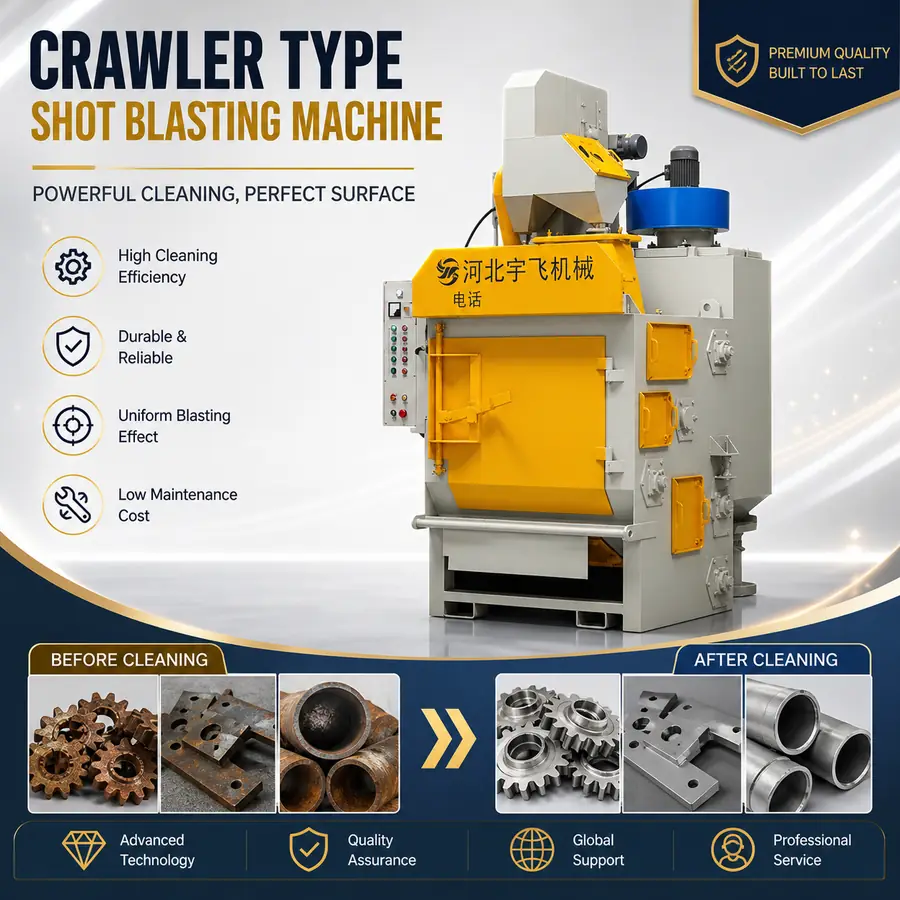
Tumble Belt Shot Blasting Machine
Q324 / Q326 / Q3210 / Q3215 / Q3220
View Details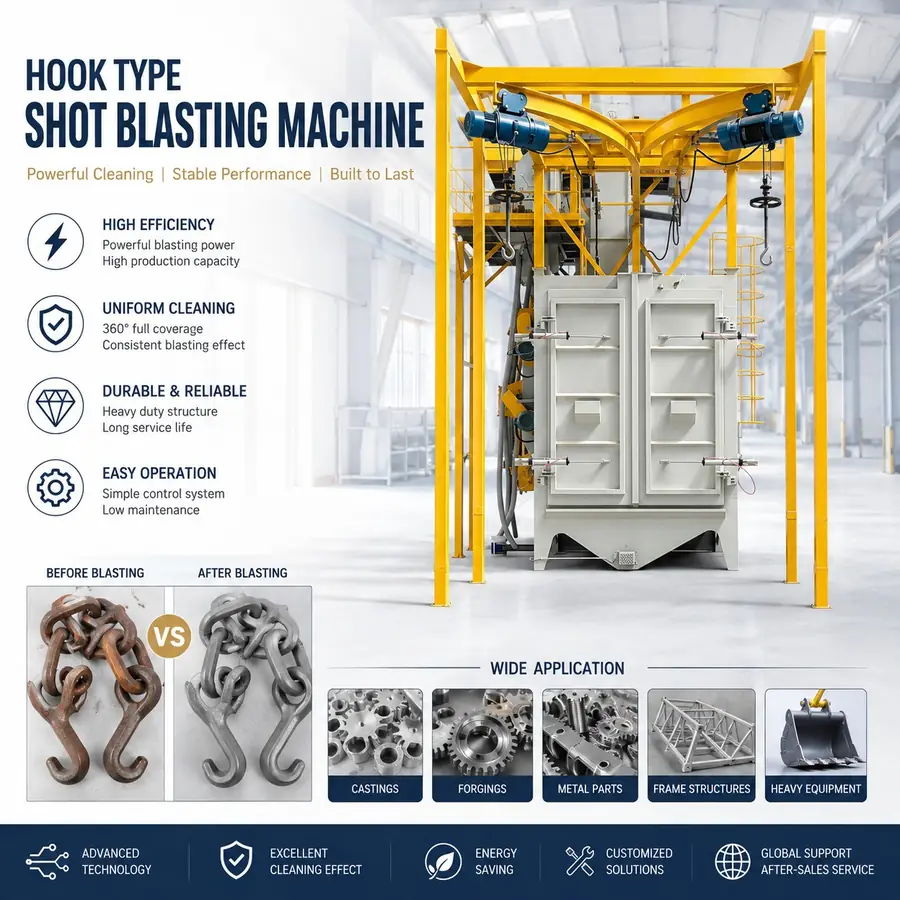
Hook Type Shot Blasting Machine
Q376 / Q378 / Q3710 / Q3720 / Q3730 / Q3740 / Q3750
View Details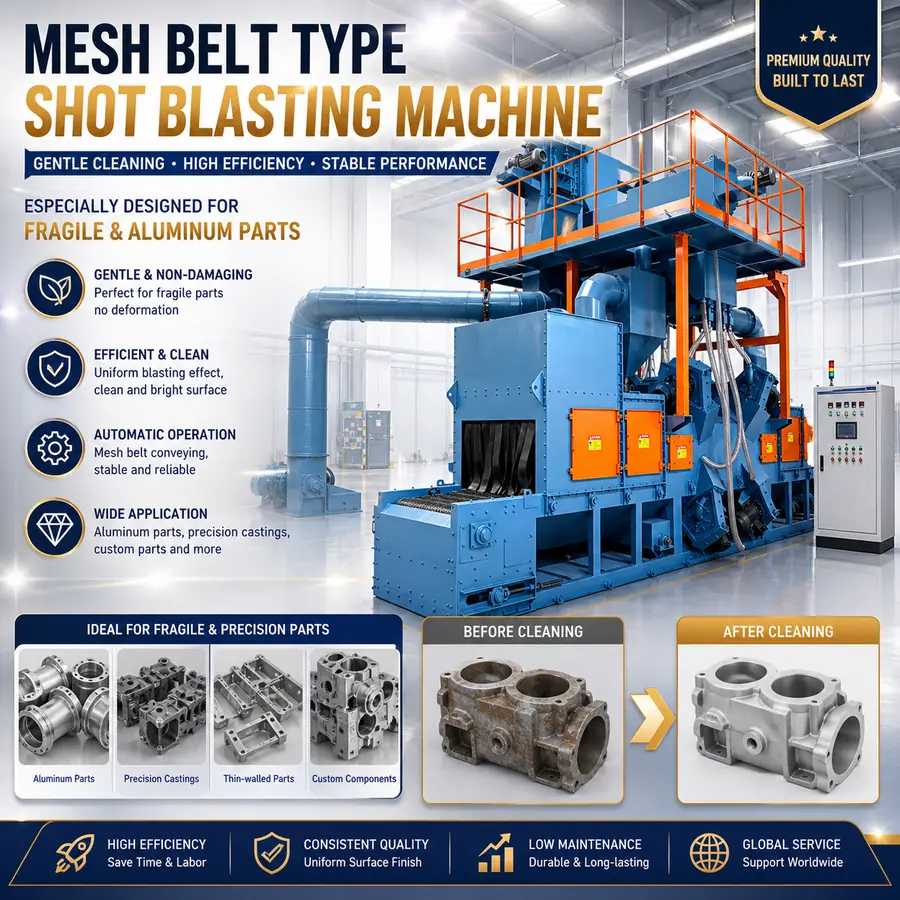
Wire Mesh Belt Shot Blasting Machine
QWD60 / QWD80 / QWD100 / QWD120
View Details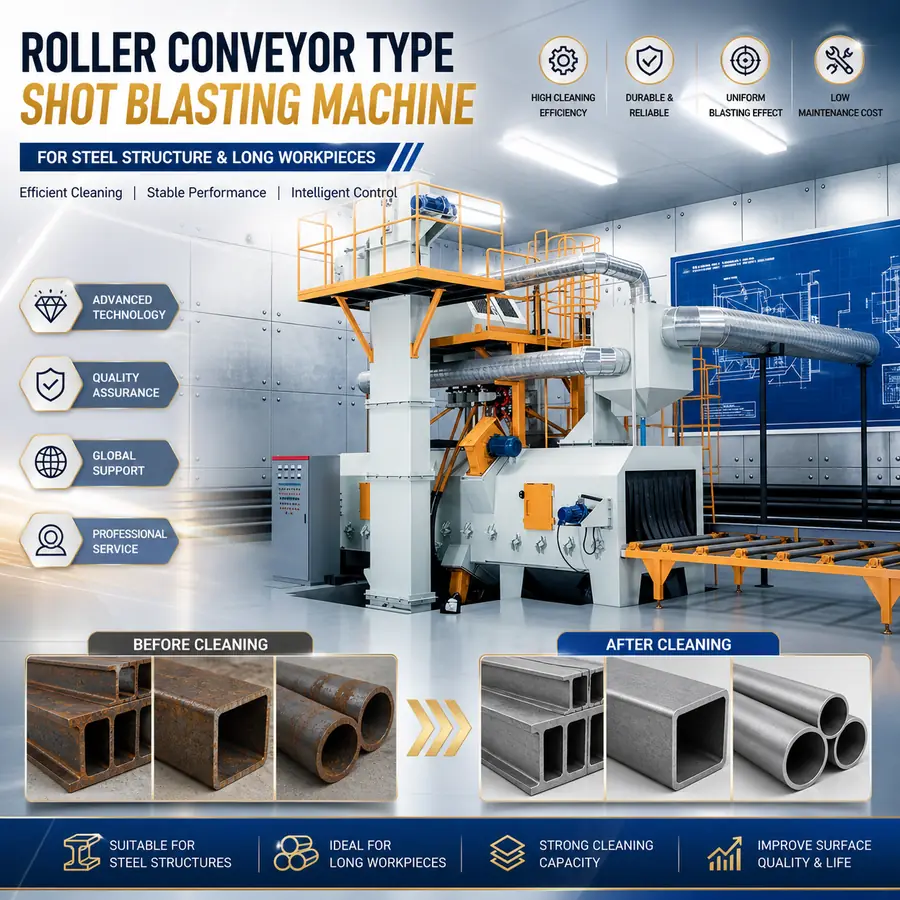
Roller Conveyor Shot Blasting Machine
Q698 / Q6912 / Q6915 / Q6920 / Q6925 / Q6930 / Q6940
View DetailsAccessories & Custom Solutions
Additional Equipment
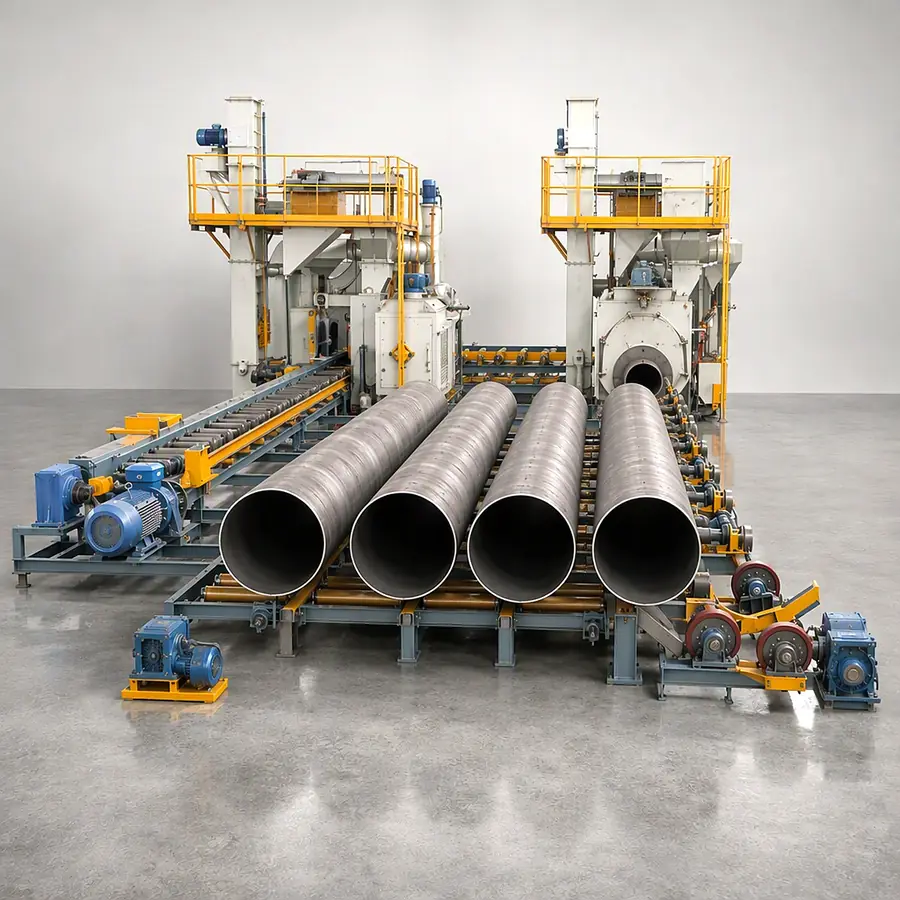
Steel Pipe Shot Blasting Machine
Custom
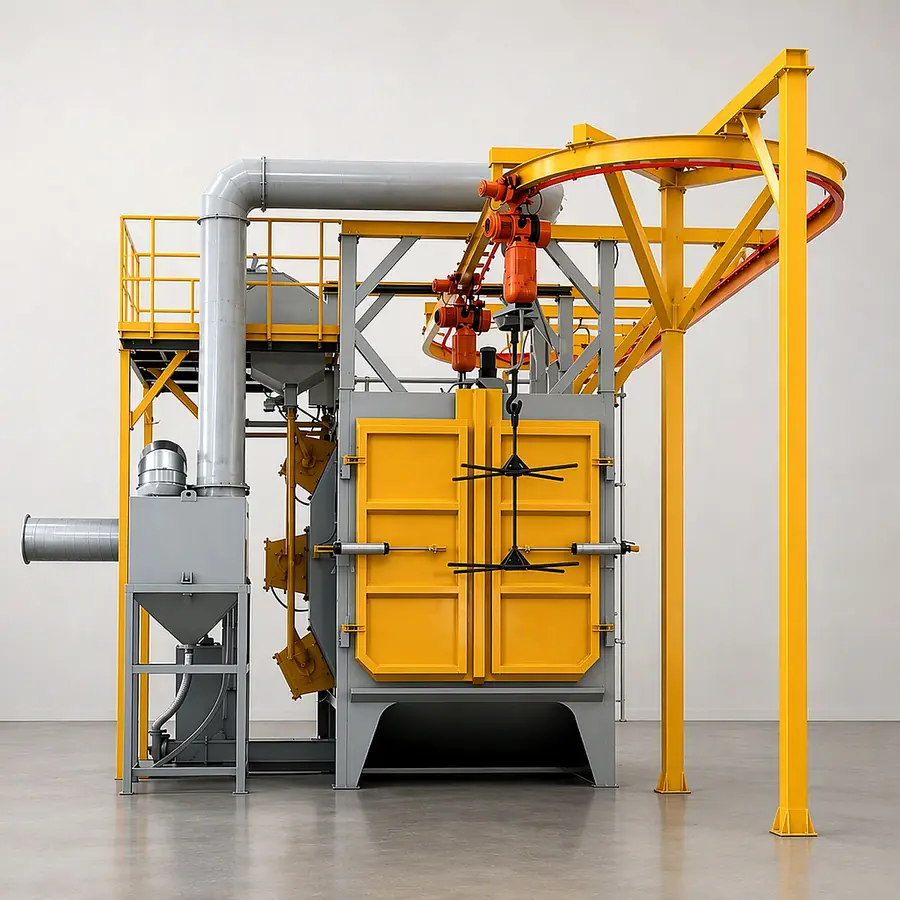
Overhead Pass-through Type Shot Blasting Machine
Custom
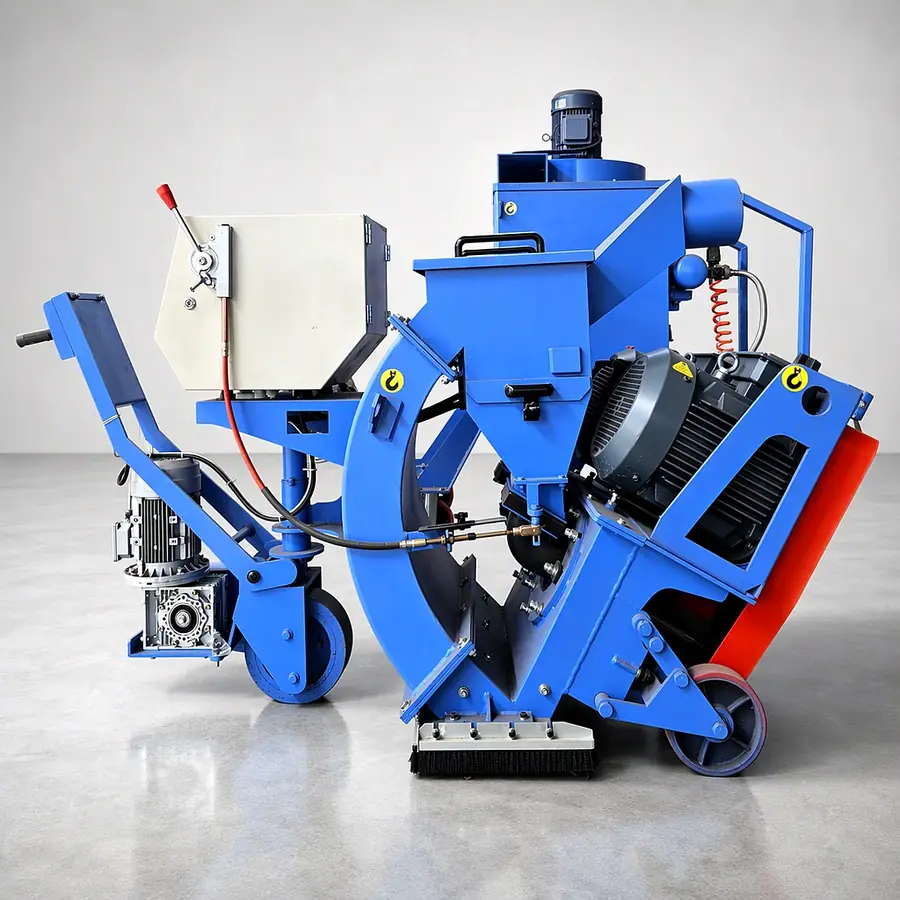
Mobile Road Surface Blasting Machine
Custom
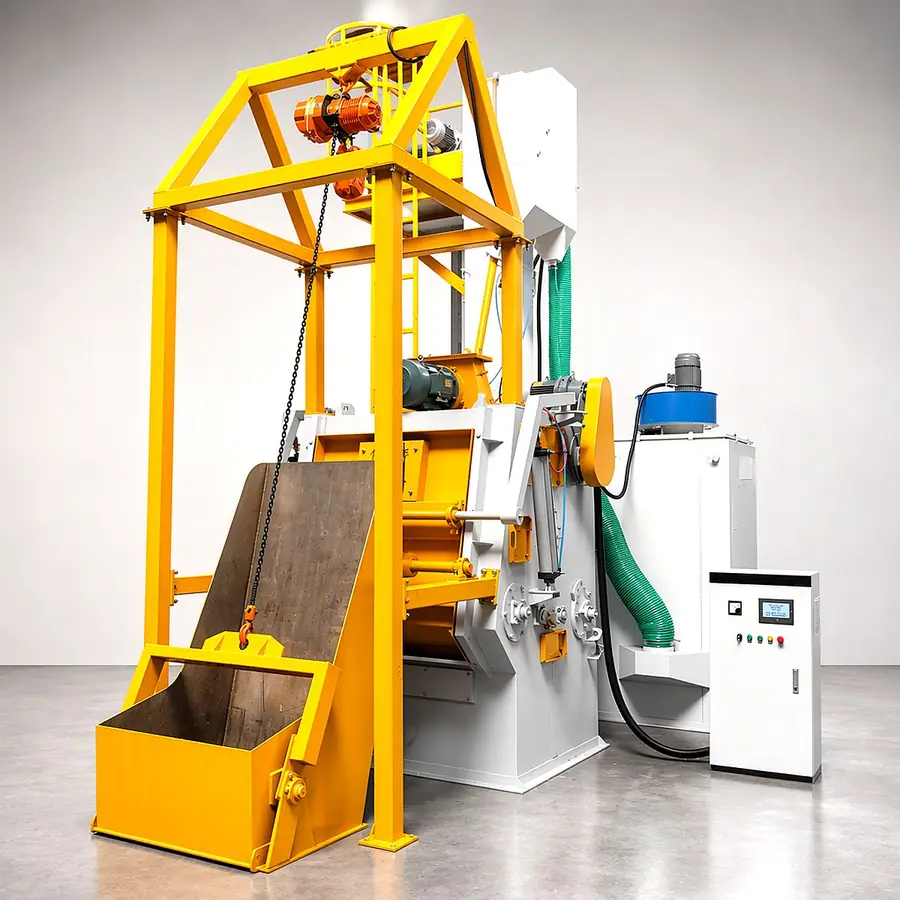
Auto Loading Blasting System
Custom
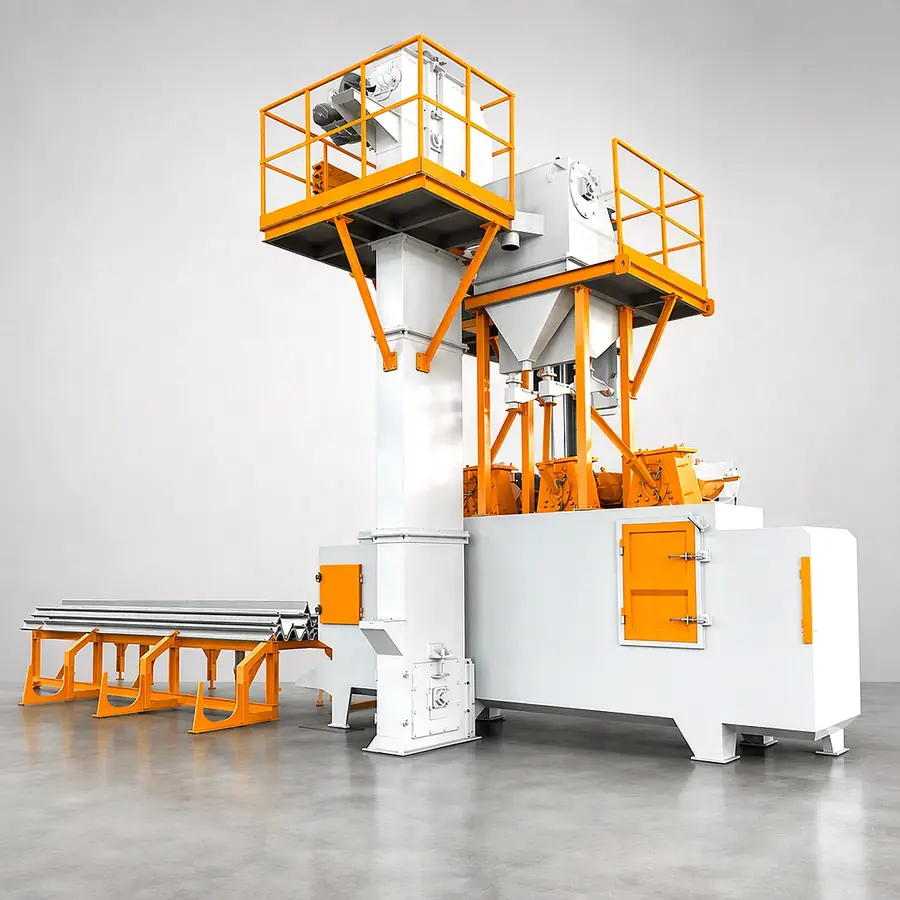
Angle Steel Shot Blasting Machine
Custom
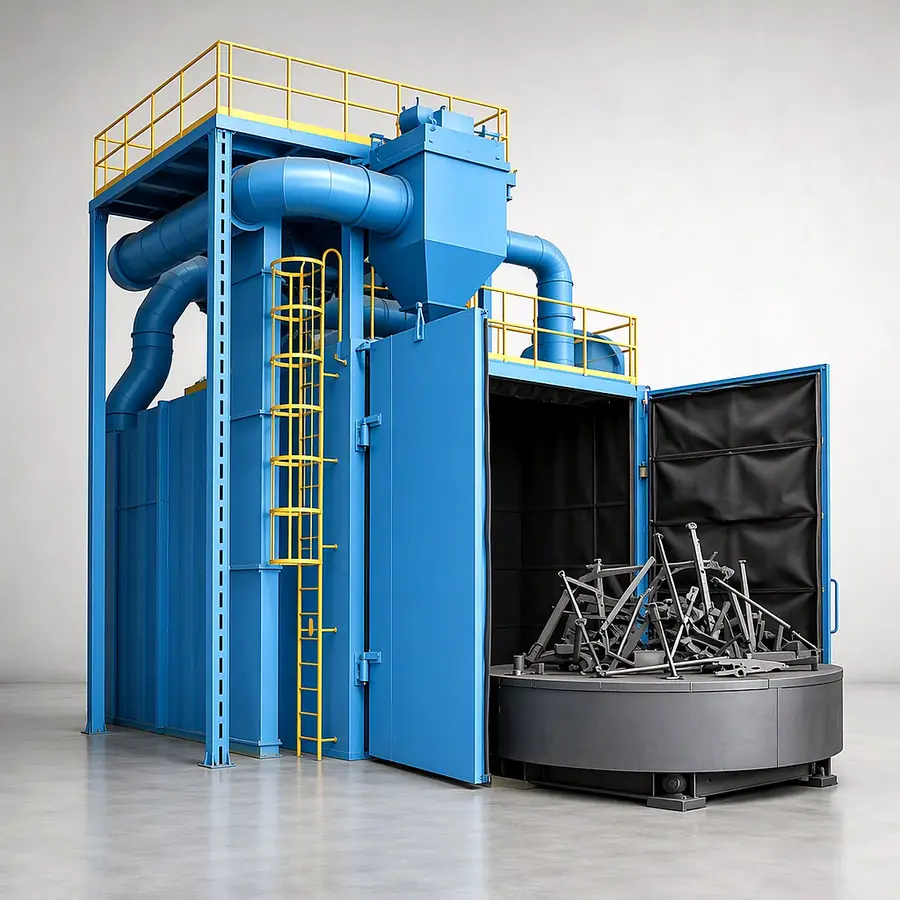
Rotary Table Shot Blasting Machine
Custom
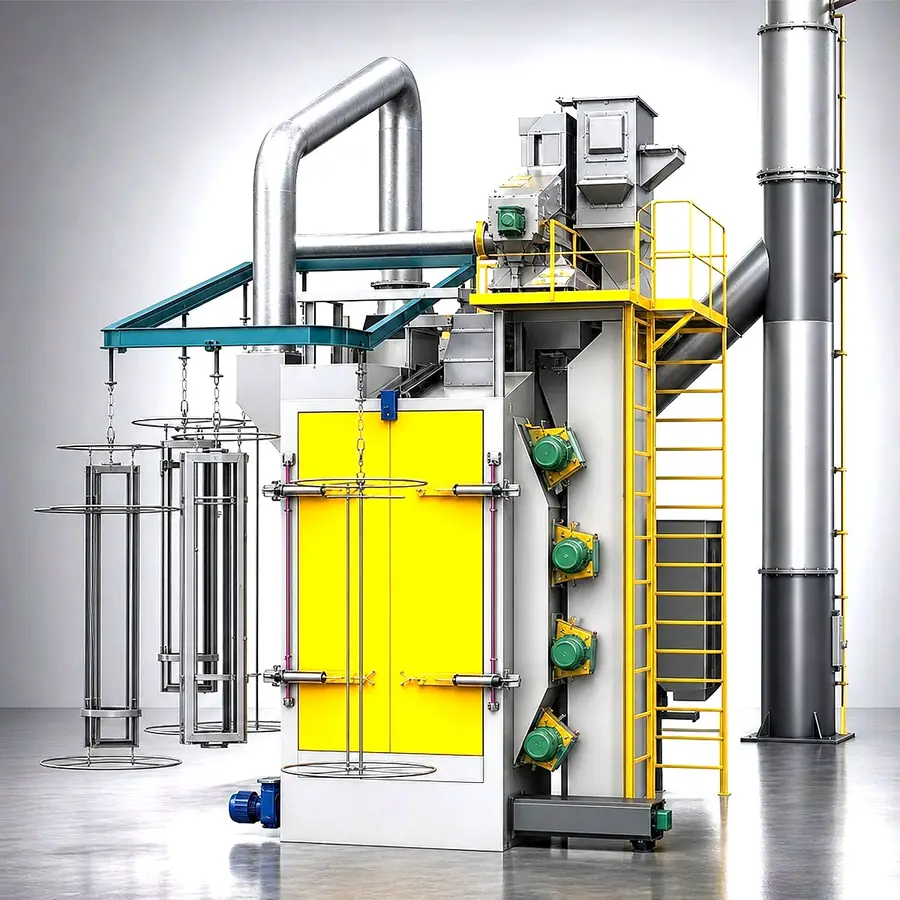
Shot Blasting Oiling Line
Custom
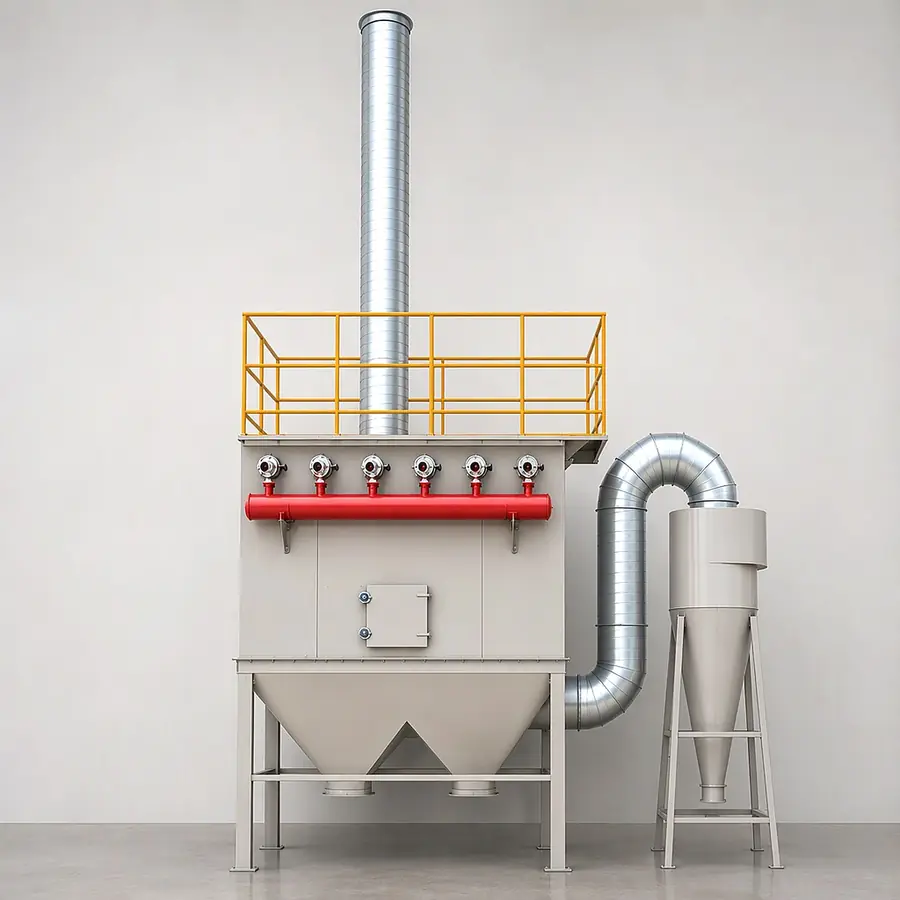
Dust Collector
Cartridge/Baghouse
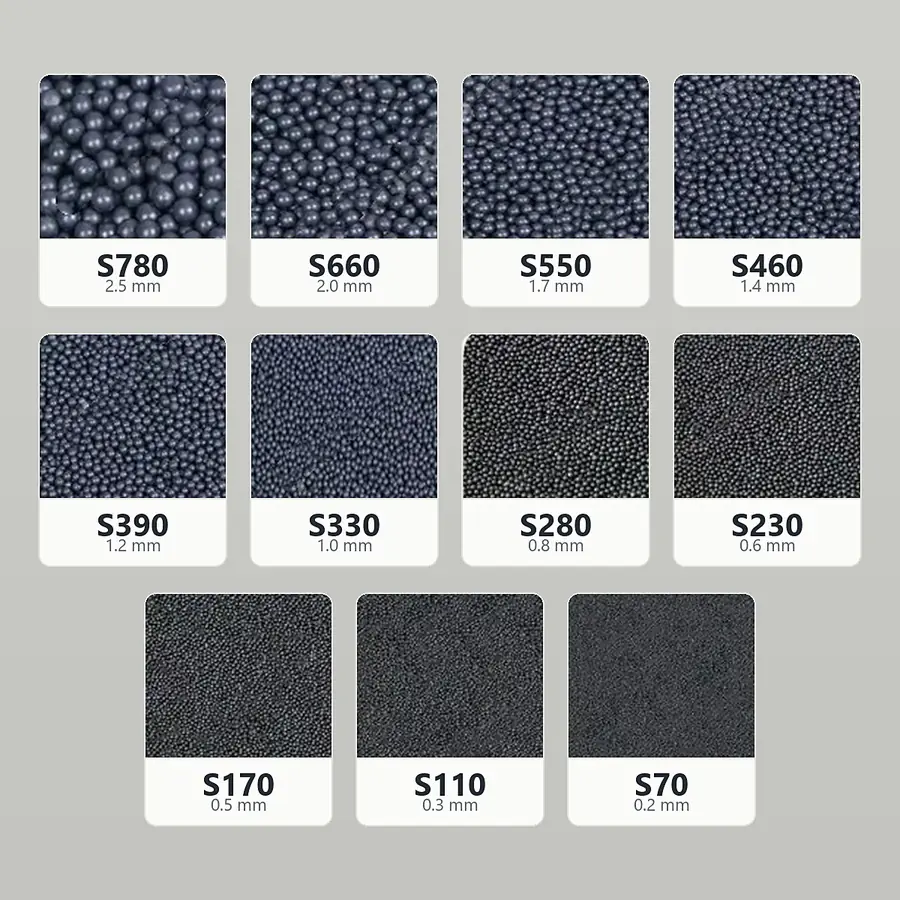
Steel Shot & Abrasive Media
S70–S550
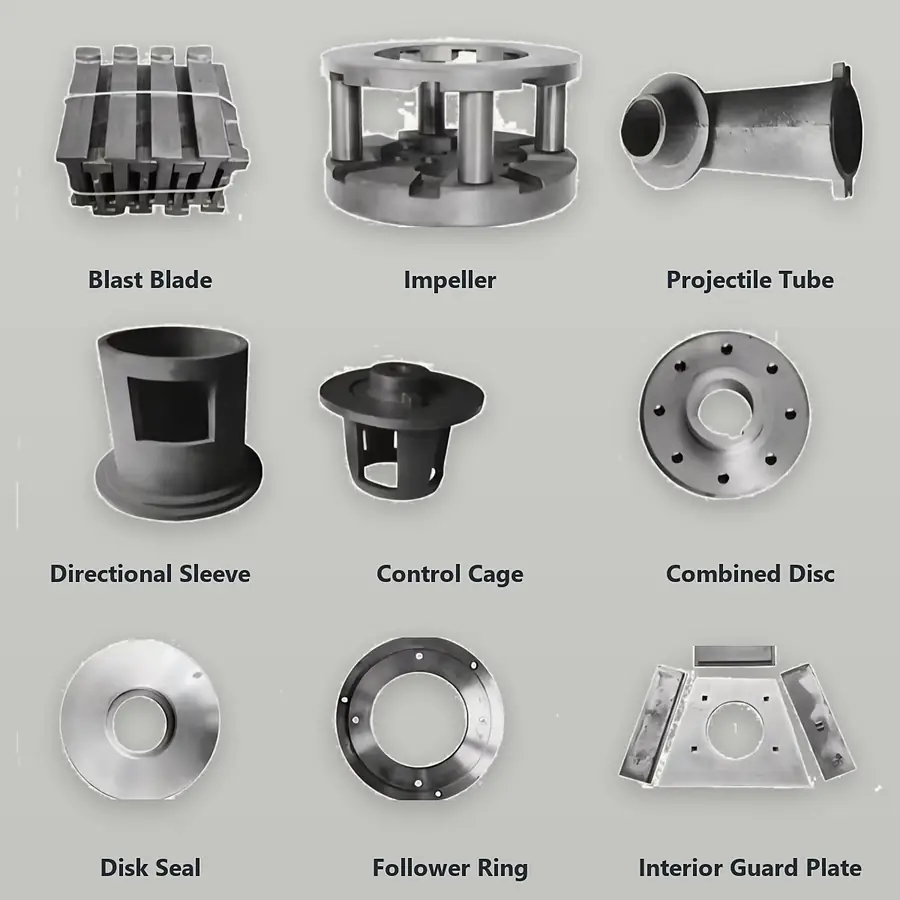
Shot Blasting Machine Accessories
OEM
What is the same whichever machine you pick
Still deciding between families? Start from what you make rather than from the catalogue — castings and structural steel are worked through with the numbers that decide the size.
The differences between types are real, but a buyer comparing quotations should know what does not change across the range. Every machine is built in our own workshop in Botou, Hebei — 20,000 m² and 80–100 staff, around 300 units a year — and tested at the delivery voltage before it is crated, not at the voltage of our own grid.
Wear parts — blades, control cages, chamber liners, door seals — are held as stock items and ship by air freight, reaching most countries in about seven days, because a machine that is down is worth less than the part that fixes it. New machines carry a one to two year warranty depending on the application, and the commercial terms are the same across the catalogue: 30% T/T deposit, balance before shipment, standard models out in 7–10 days and custom builds in about 15.
Full model tables, chamber dimensions and wheel power for each series are in the range overview PDF, and the specification sheets for individual models sit on each model page.
Don't See What You Need?
Most Yufei equipment is custom-engineered. Contact us with your requirements for a tailored solution.
Request Custom Proposal