
Tumble Belt Shot Blasting Machines: The Full Model Range, and How Customers Actually Use Them
Q326 or Q3220? Steel or copper parts? A foundry in Sri Lanka, a forge in Russia, a turbocharger shop in Mexico, a powder coating line in Switzerland — here's what we've learned from twenty years of building these machines.
The lineup at a glance
The honest question: how much machine do you actually need?
We get asked the same thing almost every week: "Which model should I buy?" The answer is rarely about the machine. It's about your parts — how big they are, how heavy, how many you process in a shift, and what material they're made of.
The difference between our models is essentially size, and size decides loading capacity. That's it. There's no magic in a bigger number — there's just a chamber that holds more parts.
Real numbers from our spec sheet
These are the values we quote every day. They're typical numbers — we adjust them when your workpiece demands it.
| Parameter | Q326 | Q3210 | Q3215 |
|---|---|---|---|
| Workpiece single weight | 10 kg | 30 kg | ~25 kg |
| Max workpiece size | L = 600 mm | L = 900 mm | L = 1,000 mm |
| Loading capacity | 200 kg | 600 kg | 1,000 kg |
| Blast amount | 160 kg/min | 250 kg/min | 200 × 2 kg/min |
| Blast wheel power | 7.5 kW | 15 kW | 11 × 2 kW |
| Total power | 14 kW | 25 kW | 32 kW |
| Machine size (L×W×H) | 1.8 × 1.7 × 3.0 m | 2.0 × 2.2 × 3.3 m | 4.0 × 4.5 × 5.7 m |
These models are also listed on our tumble belt product page — you can request a quote directly from there.
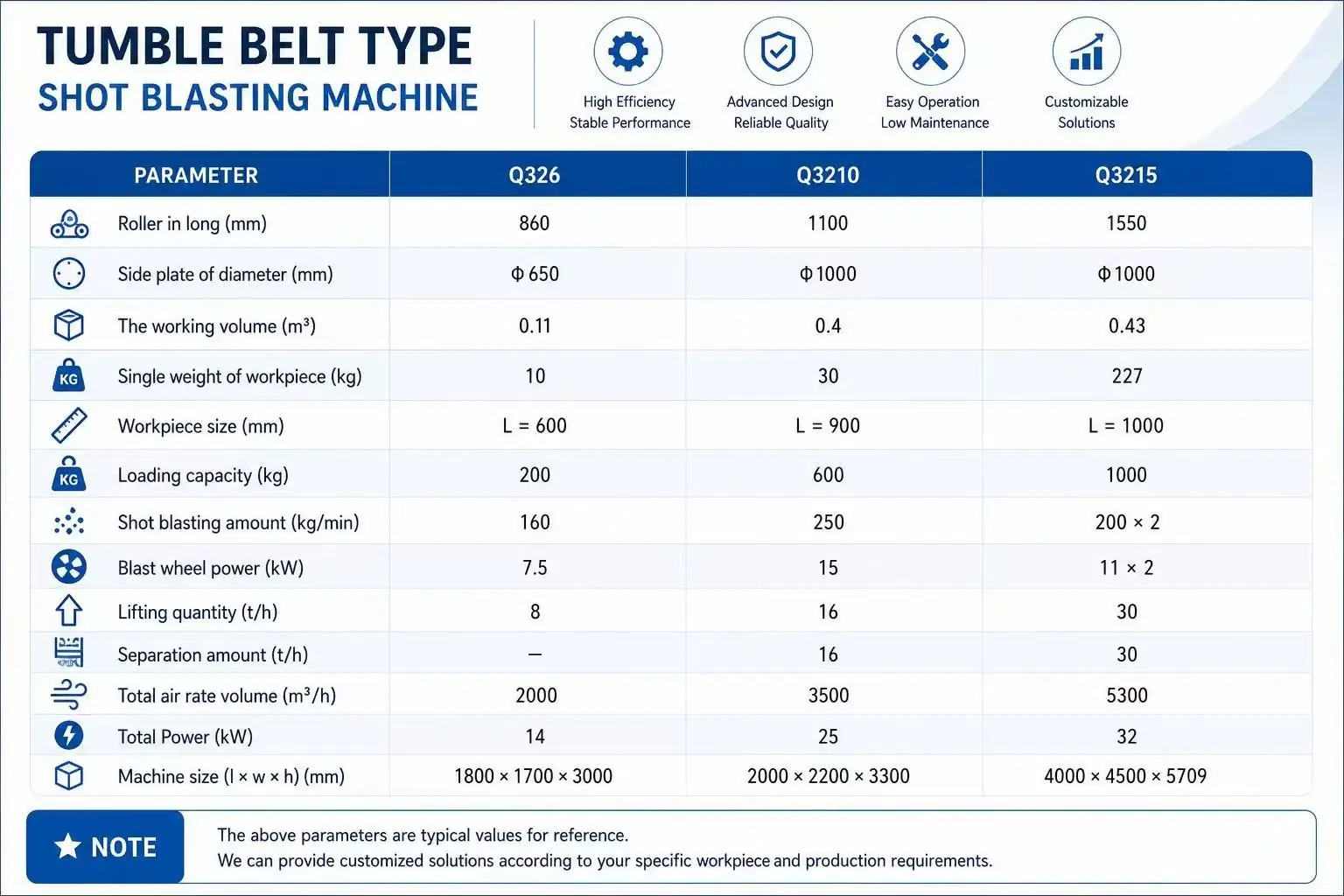
Our standard spec sheet — the Q3220 follows the same pattern with a bigger chamber.
The two models we keep in stock
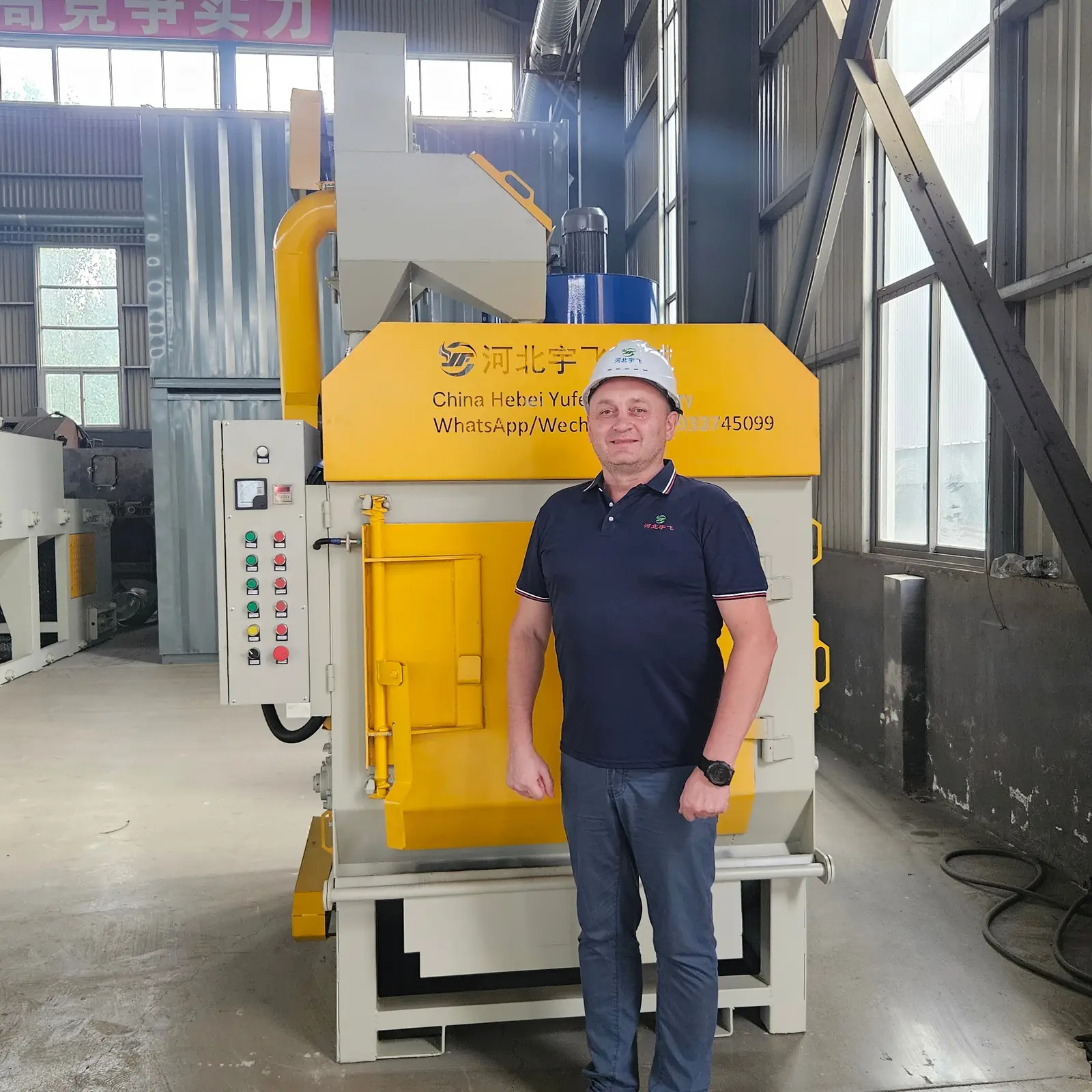
Here's something not every manufacturer will tell you: we build the Q326 and Q3210 in batches year-round, and we keep them in stock. Not because they're cheap — because they're the models foundries and forges actually buy, again and again. If you need one next month, we can usually ship from stock instead of quoting a 60-day lead time.
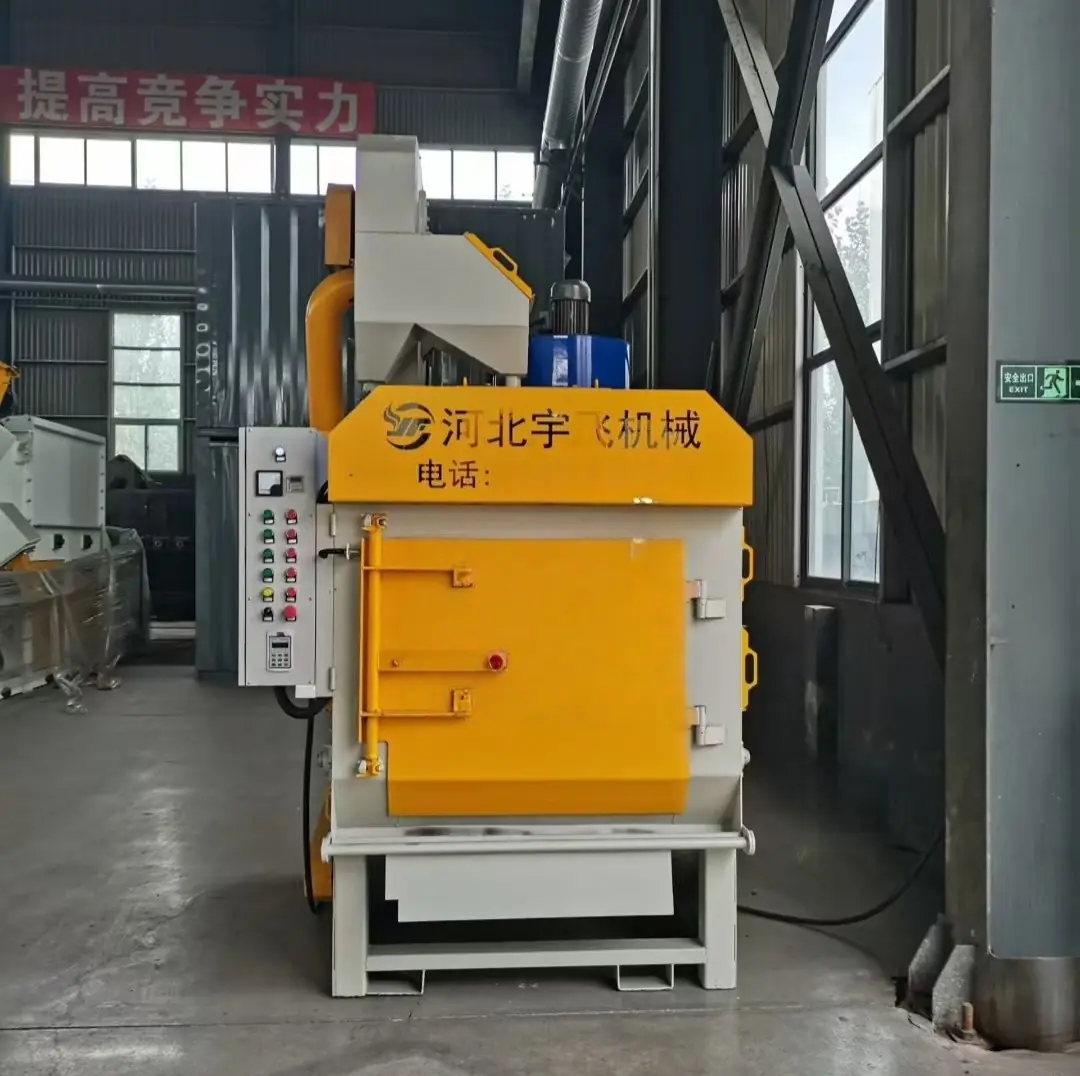
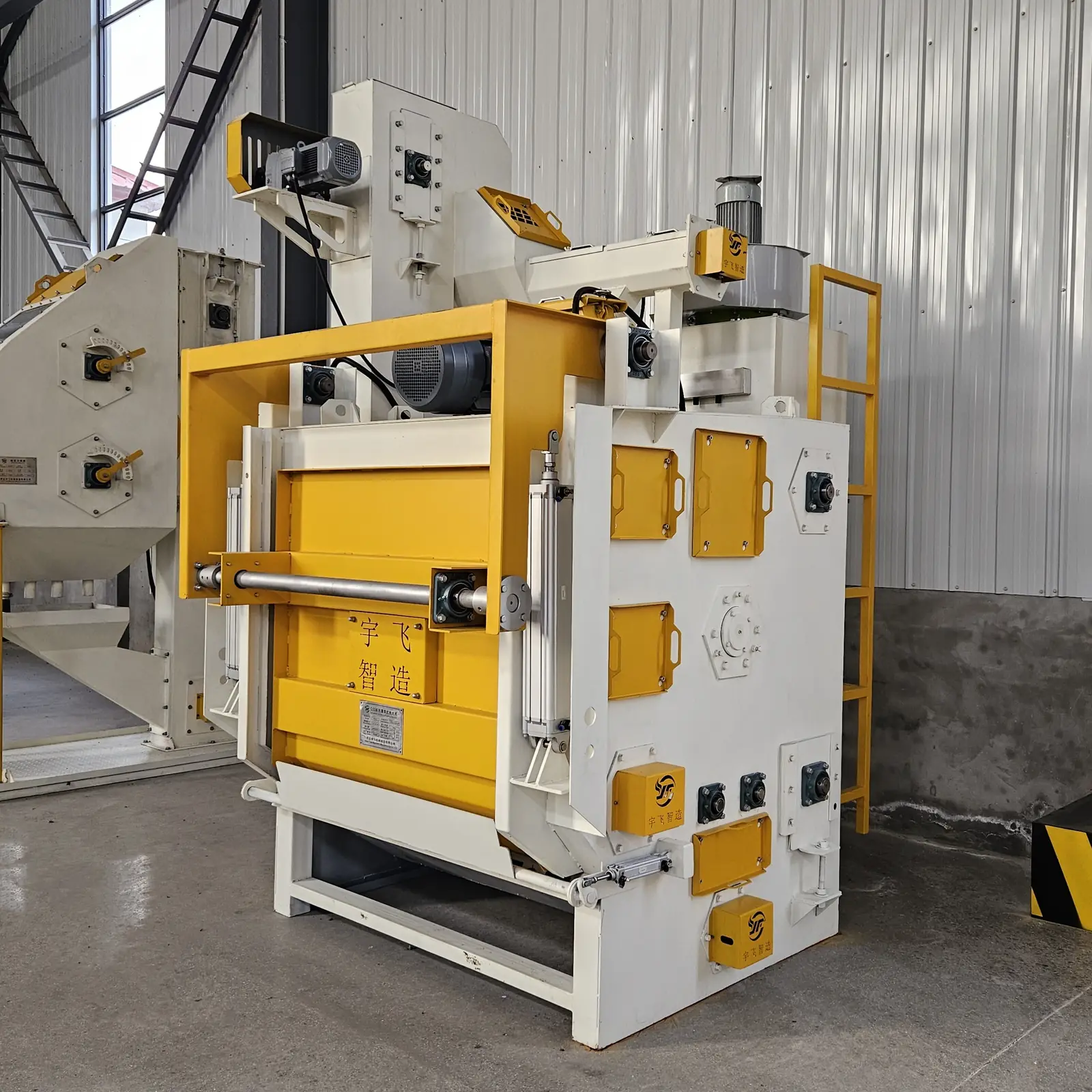
Q326 (left) and Q3210 (right) — our two stock models.
The upgrades customers actually ask for
Two options come up again and again, and both are worth explaining properly.
Automatic door. The manual door on a tumble machine is heavy — it has to be, to seal a blast chamber. Customers who run three shifts, or who have operators loading parts all day, usually take the pneumatic automatic door. It's not a luxury; it saves backs and speeds up the cycle.
PLC + touchscreen. We fit Siemens controls on the higher-spec machines. Recipe storage, cycle timers, fault diagnostics — for a workshop that runs the same parts every day, it turns the machine from a tool into something you can hand to any operator.
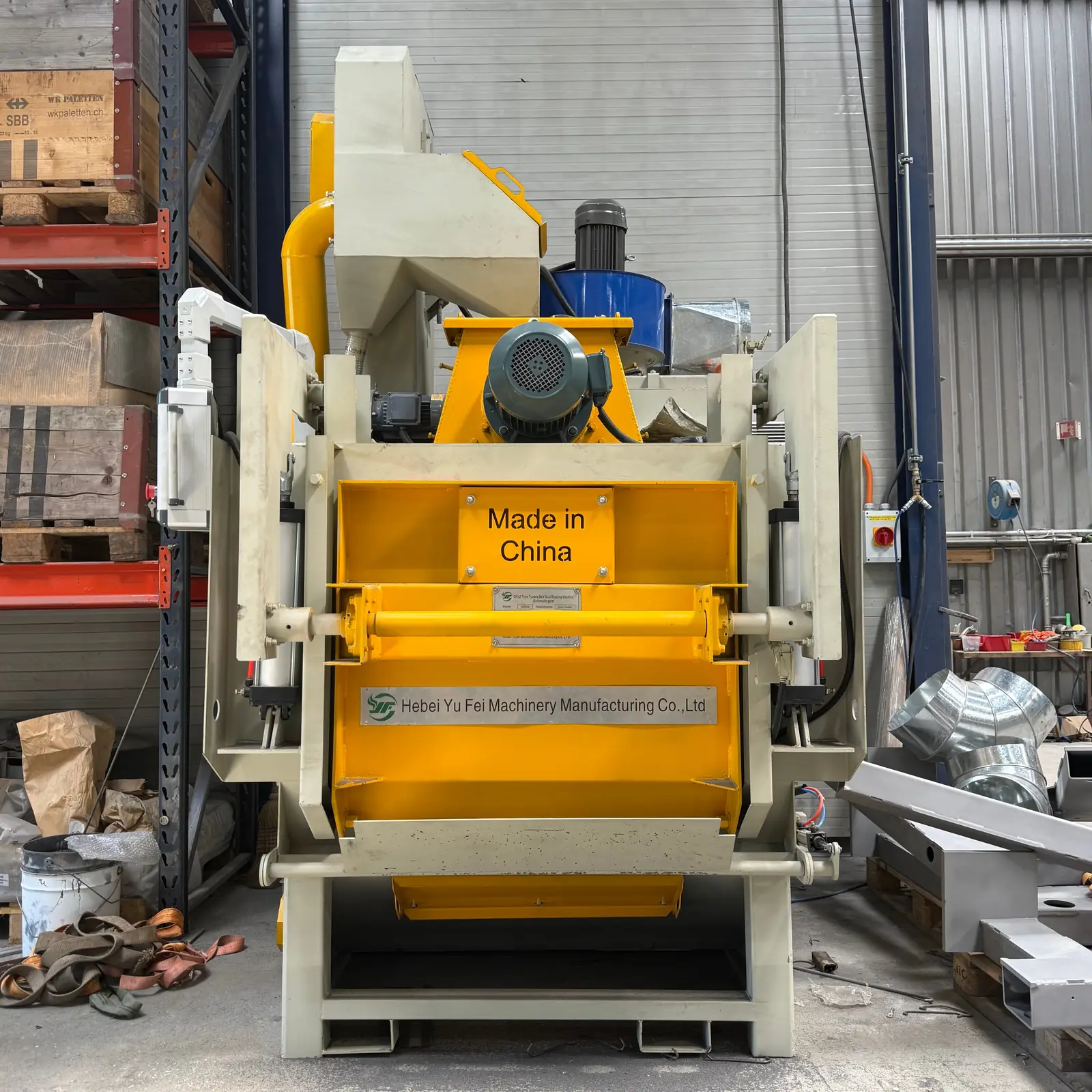
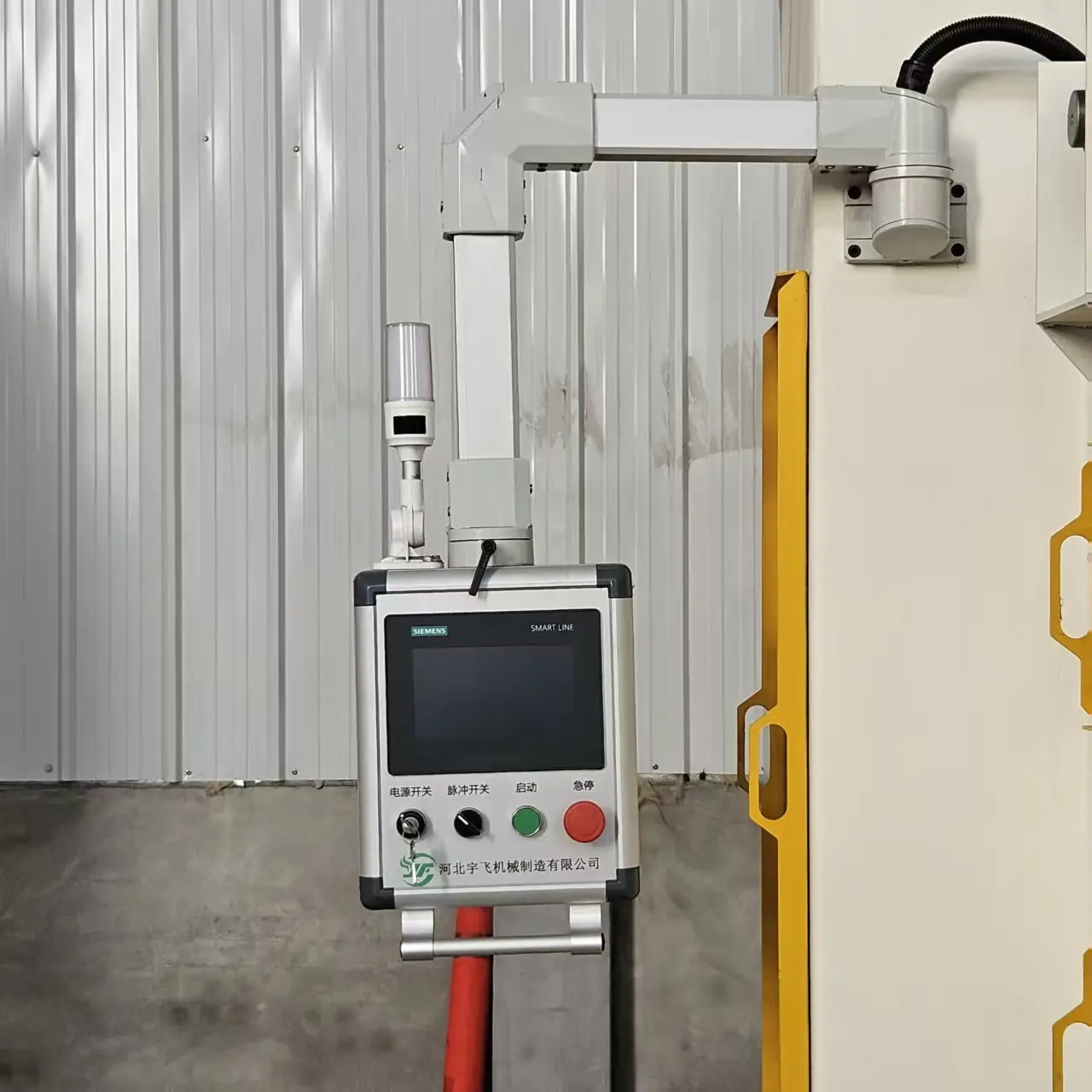
Left: automatic door version. Right: the Siemens SMART LINE touchscreen we fit on request.
Steel, copper, stainless — it all cleans
A question we hear from new buyers: "Will it handle my material?" Our tumble machines clean iron, steel, copper, brass, and stainless parts without any modification — you just adjust the blast intensity and pick the right shot size. Parts under about 50 kg each are the sweet spot for tumble machines, and small parts in batch production are exactly what this design does best.
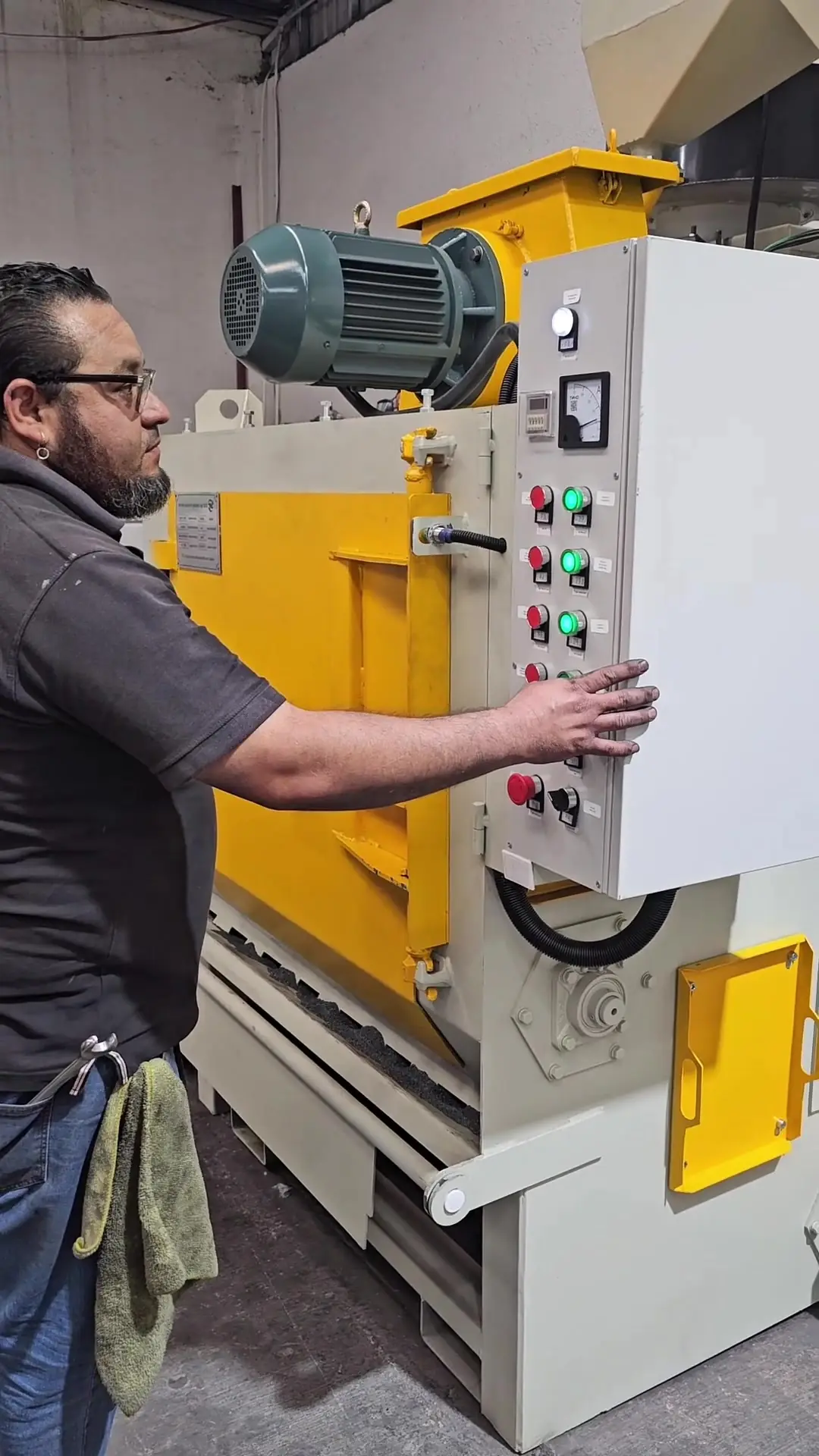
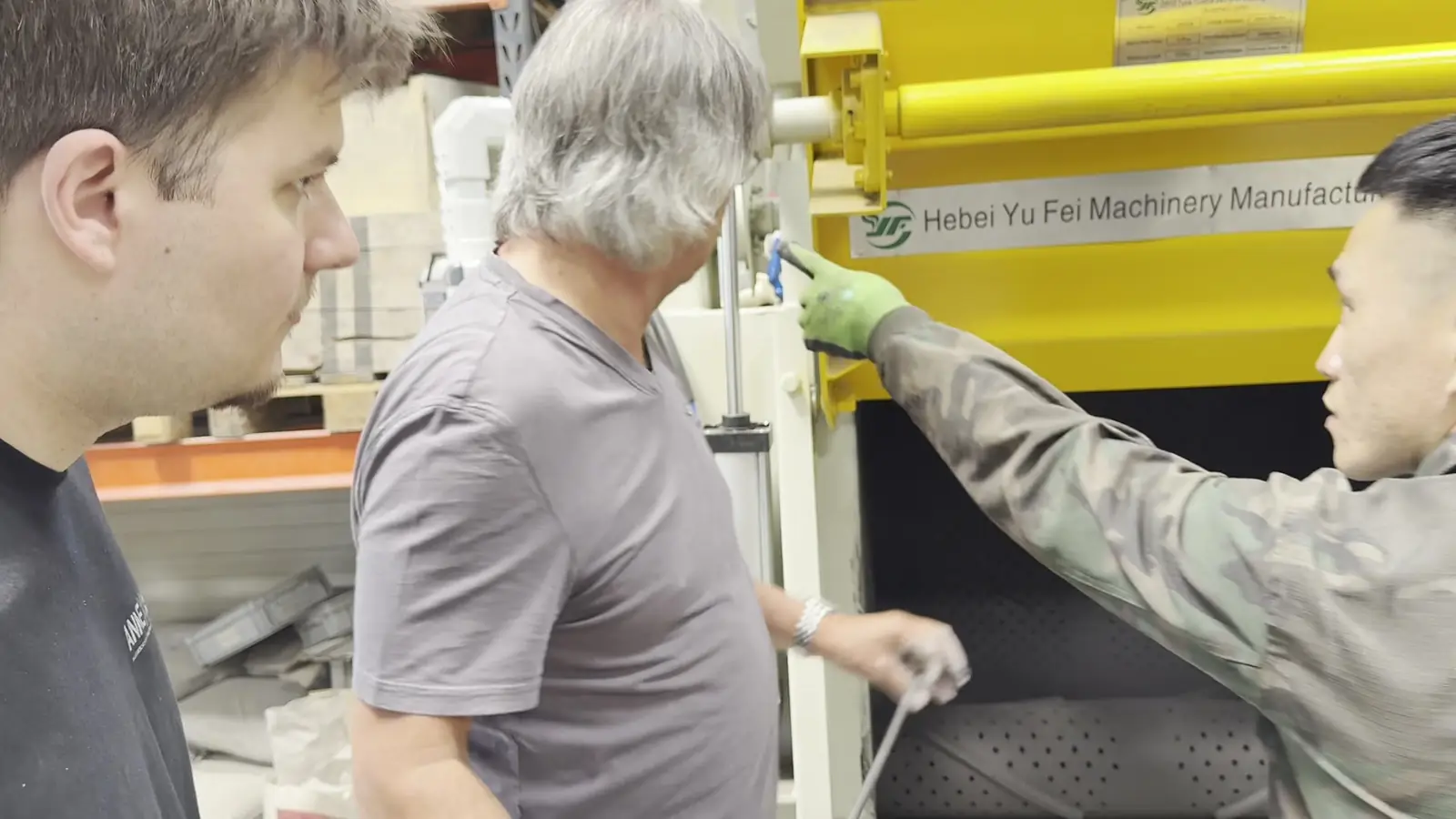
Left: a customer in Mexico loading turbocharger housings. Right: engineers in Switzerland inspecting their machine.
What customers in four countries taught us
We've shipped tumble machines to foundries, forges, coating lines, and machine shops on every continent. A few stories stand out.
Sri Lanka. A foundry bought a Q326 for their castings. They brought their own workpieces to our factory for a test run before ordering — and watched the first batch come out clean in about eight minutes. The machine went to work the same week it arrived.
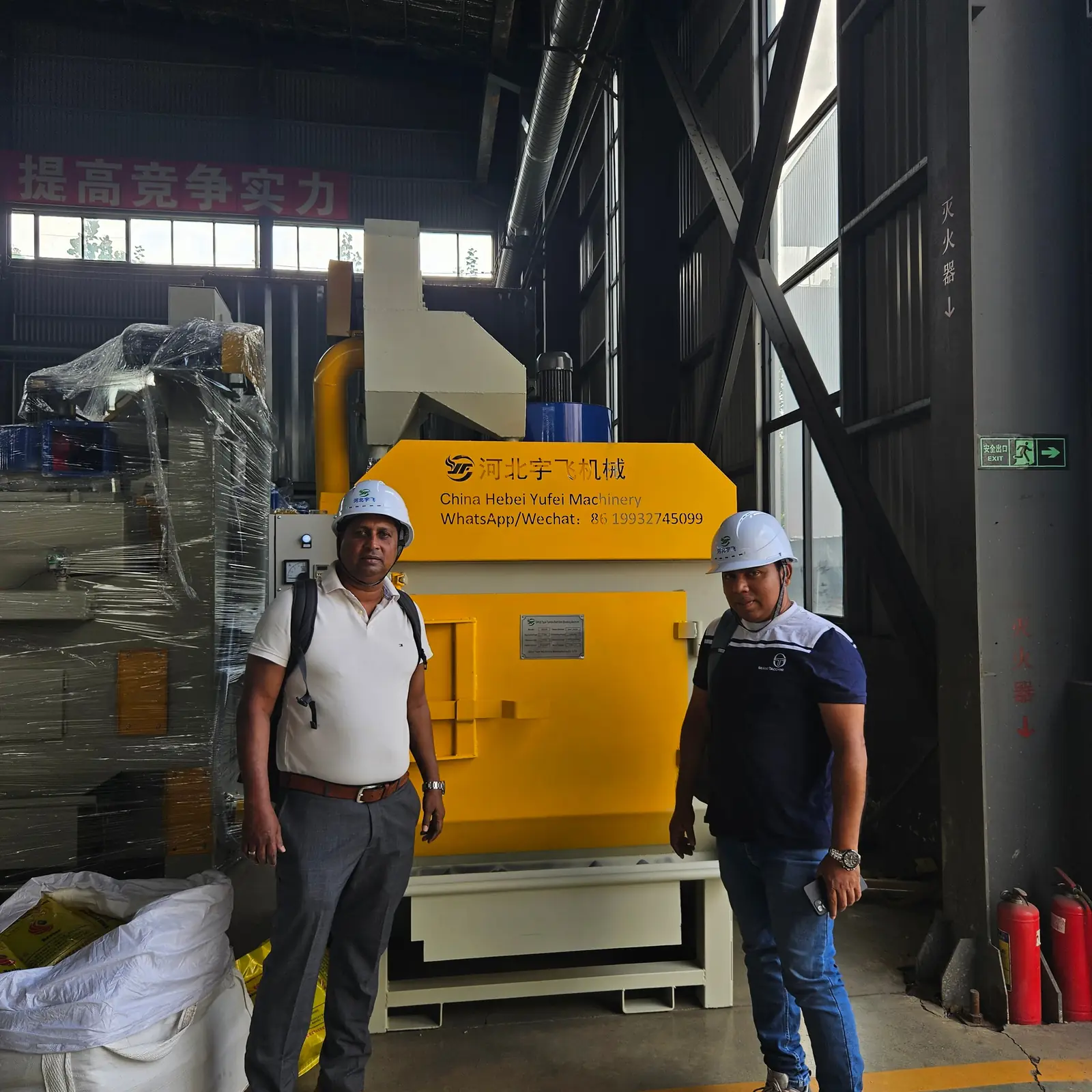
Russia. A forging shop took a Q326 after a factory acceptance visit. The customer came in wearing our workwear — not something we ask for, but a good sign — and checked the welding, the wheel balance, the cabinet wiring. He signed off on the spot.
Mexico. A turbocharger overhaul shop runs a Q326 daily, cleaning housings between jobs. It's a small shop; the machine does the work that used to take a man and a sandblasting booth all afternoon.
Switzerland. The customer's engineers gathered around the machine during commissioning. Their verdict, in one word: perfect.
Shipping: the part we engineer as carefully as the machine
Nobody thanks you for the machine fitting into the container — but everybody remembers when it doesn't. We weld shipping brackets to the back of every tumble machine before crating. The brackets hold the machine rigid inside the container, stop the tumbling mass from shifting during transit, and keep the whole unit from sliding under braking or rough seas. The machine arrives exactly as it left the workshop.
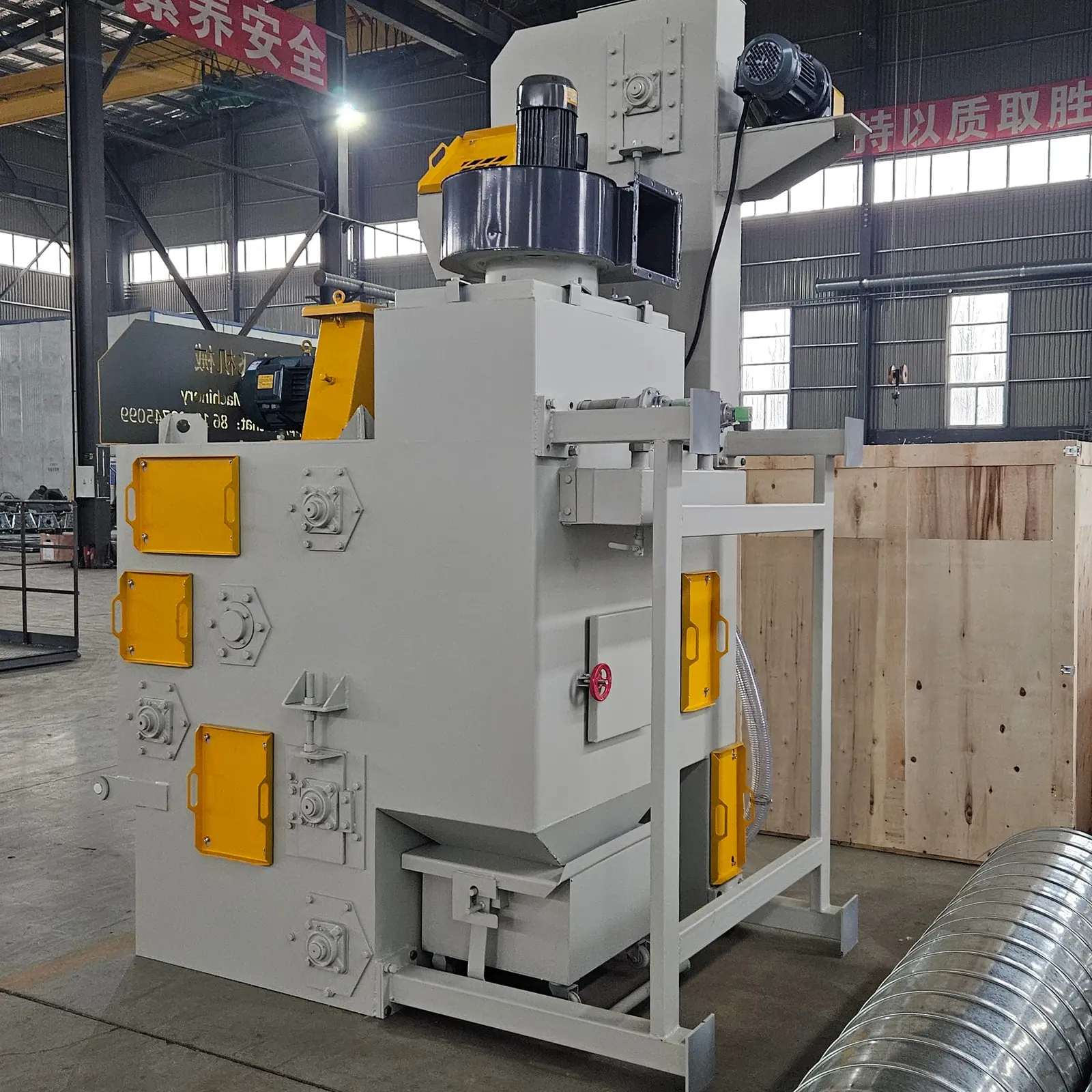
Every machine gets shipping brackets and full crating before it leaves the workshop.
Which model for you?
- Parts under 10 kg, batch under 200 kg → Q324 or Q326
- Medium castings, 600 kg batches → Q3210 (the workshop workhorse)
- Heavier castings, 800 kg batches → Q3215
- Large-batch production, 1–1.5 tons → Q3220
- Three shifts or heavy operator use → add the automatic door
- Recipe-based production → add the Siemens PLC + touchscreen
Tell us about your parts — we'll tell you the model
Send your workpiece photos, dimensions, and shift throughput. We'll recommend the model and confirm stock availability.
Questions buyers ask about the tumble belt range
Related: the Q326 model page, the step-by-step tumble belt selection guide, which machine type fits your part, Q326 vs Q3210.
Send Your Specifications