
Tumble Belt Shot Blasting Machine: Complete Selection Guide for Foundry & Forging Applications
How to choose the right tumble belt shot blasting machine for your production needs. Model comparison, workpiece sizing, throughput planning, and real-world application insights from Hebei Yufei Machinery — ISO 9001 & CE certified since 2006.
In This Guide
- 1. How Tumble Belt Blasting Works
- 2. Yufei Tumble Belt Model Comparison (Q324–Q3215)
- 3. Workpiece Sizing & Batch Capacity Planning
- 4. Key Industries & Application Examples
- 5. Automation: Integrated Loading & Unloading Systems
- 6. Maintenance & Operational Best Practices
- 7. How to Request a Custom Configuration
1. How Tumble Belt Shot Blasting Works
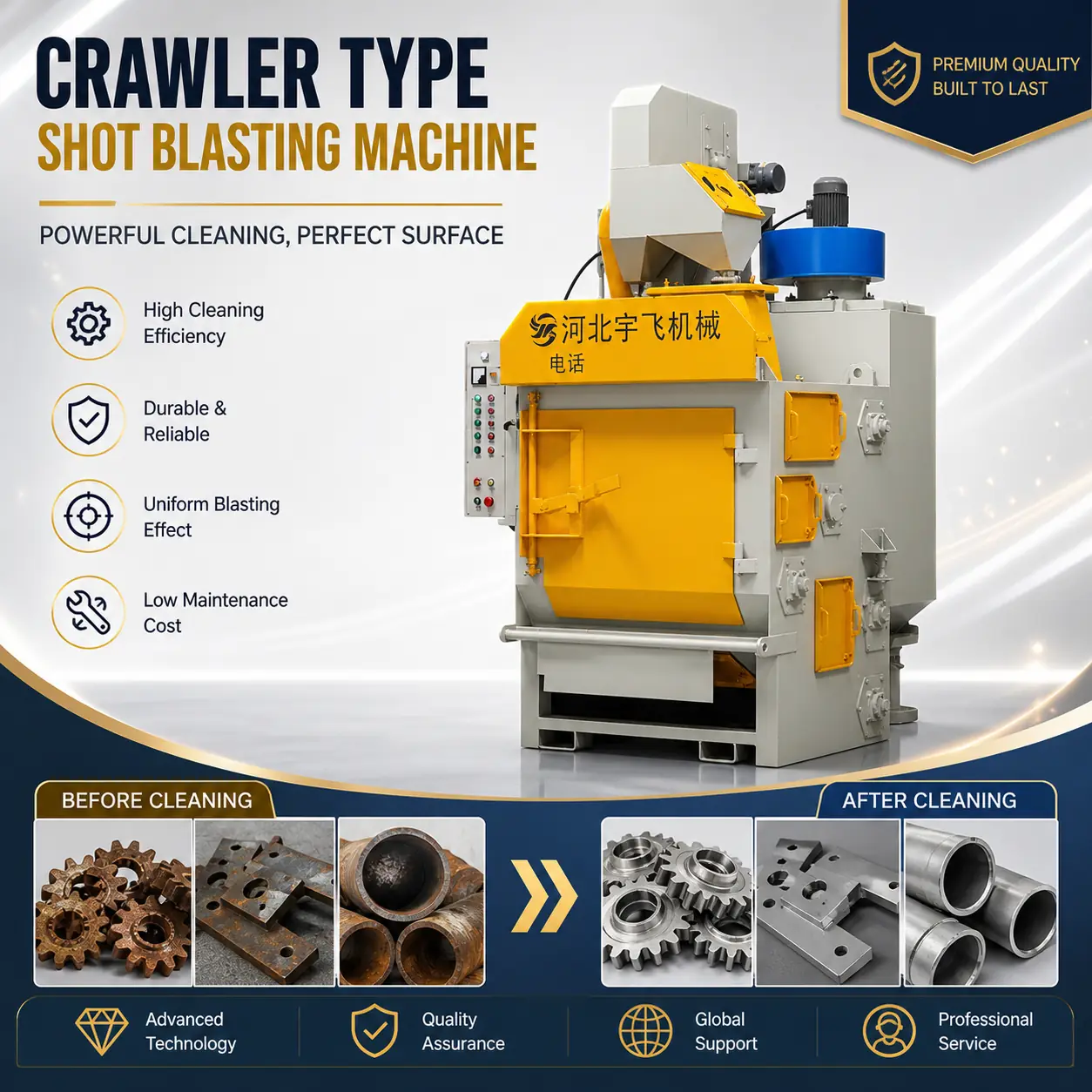
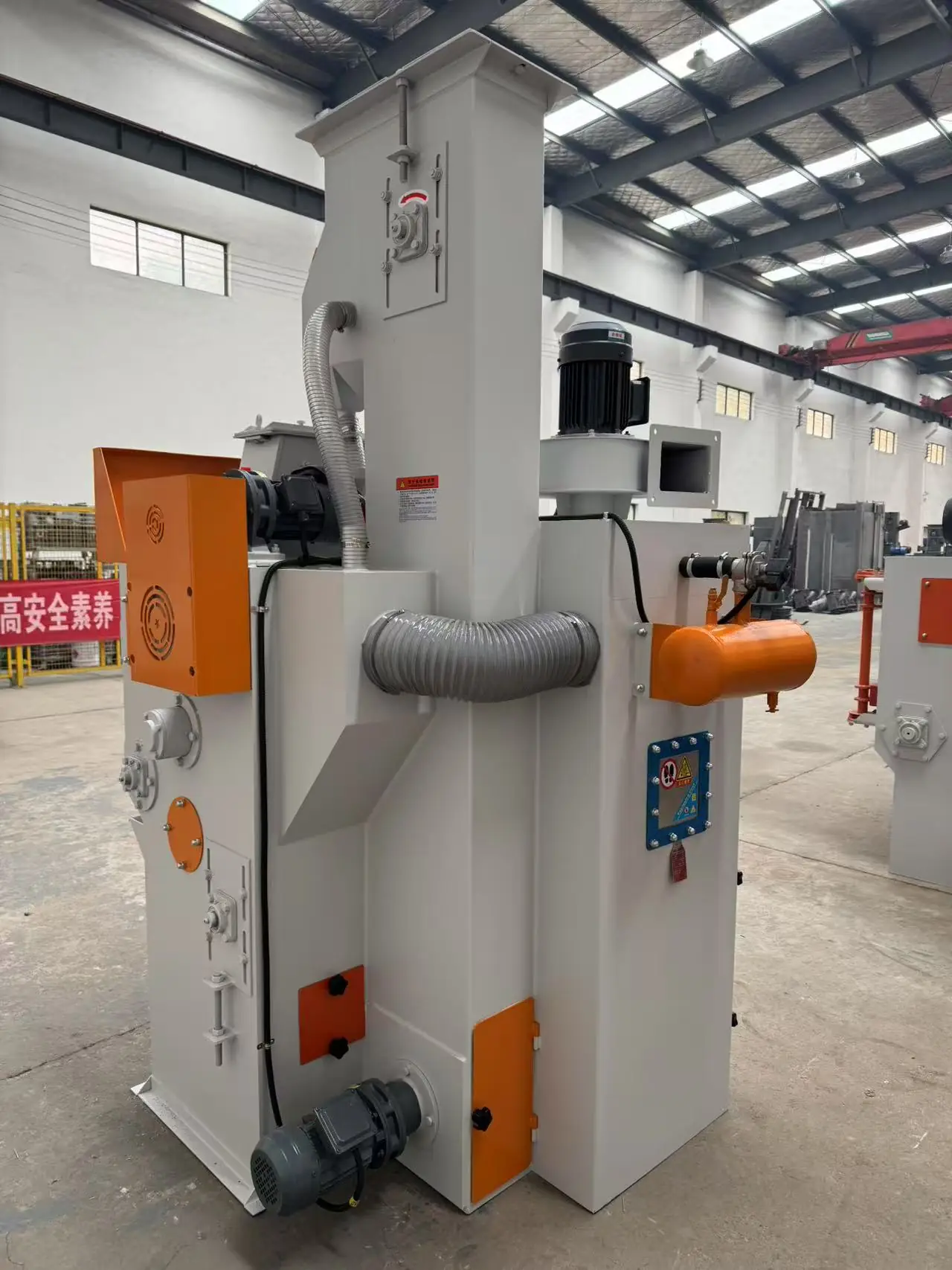
Tumble belt shot blasting machines are among the most versatile surface preparation systems in the foundry and forging industries. The core principle is straightforward: workpieces are loaded onto a rubber or steel-slat conveyor belt inside an enclosed blast chamber, where high-velocity abrasive media — typically steel shot or grit — is propelled by centrifugal blast wheels onto the tumbling parts. The belt continuously rotates, flipping and exposing all surfaces to the abrasive stream, ensuring uniform cleaning in a single cycle.
Unlike batch-type table or hanger machines, tumble belt systems excel at processing high volumes of small to medium-sized parts. Typical cycle times range from 3 to 12 minutes, depending on part geometry, desired surface finish, and abrasive selection. The continuous tumbling action is particularly effective for castings with complex cavities, as the movement ensures abrasive media reaches internal passages that fixed-position blasting would miss.
2. Yufei Tumble Belt Model Comparison
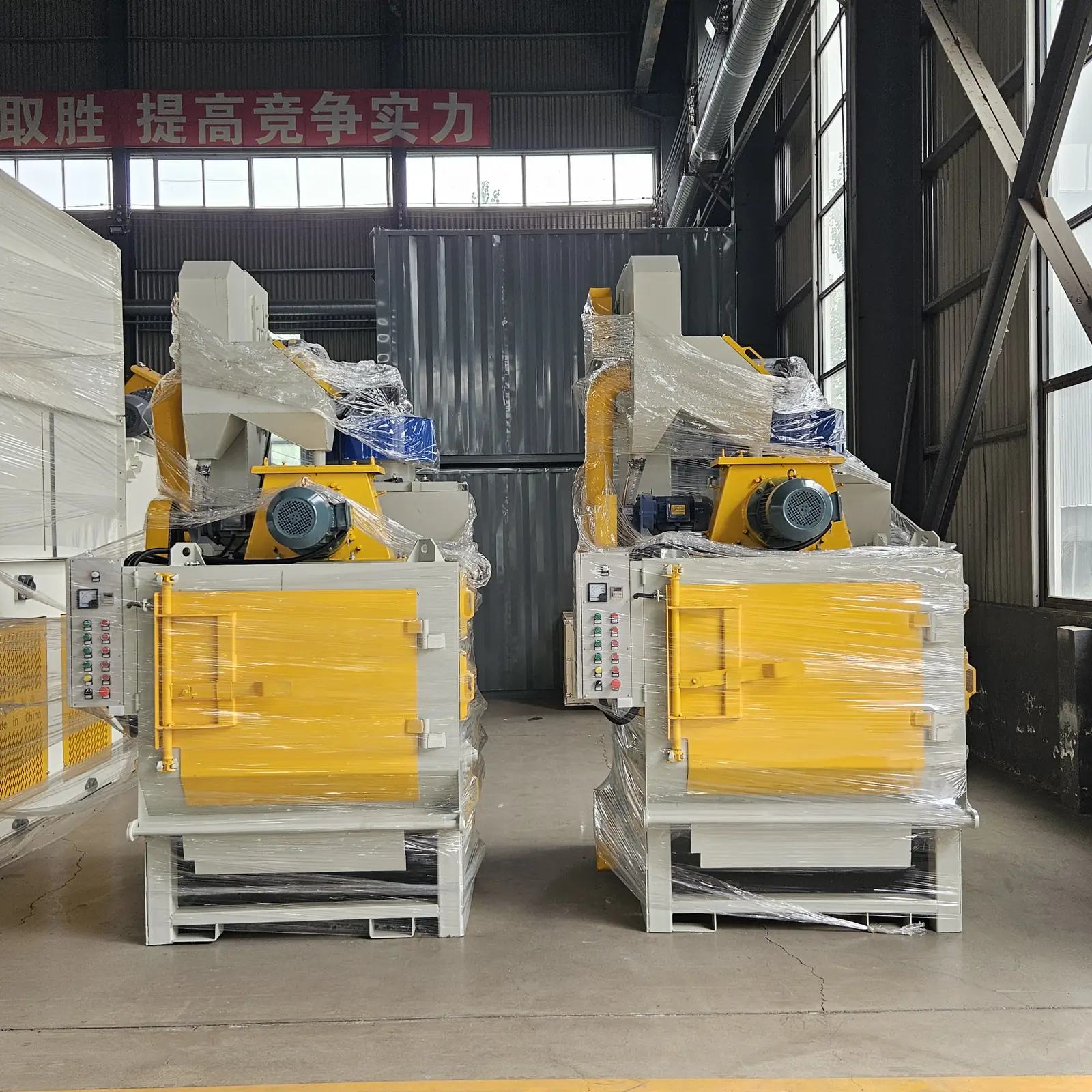
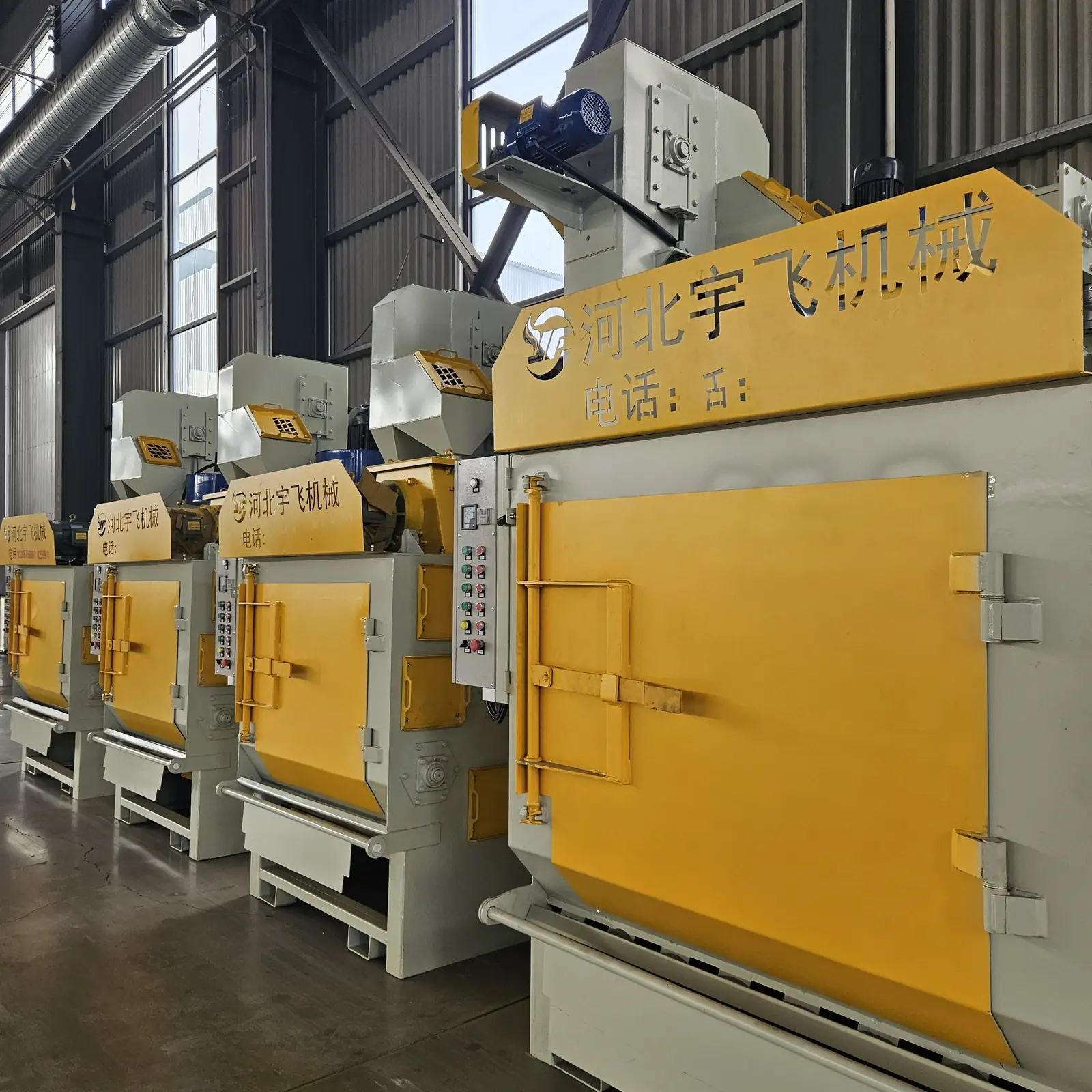
Hebei Yufei Machinery offers four standard tumble belt models spanning a wide capacity range. Each model is fully customizable — blast wheel count, motor power, abrasive recovery system, and dust collection can all be tailored to your specific production requirements.
| Model | Max Load/Batch | Blast Wheels | Motor Power | Best For |
|---|---|---|---|---|
| Q324 | 200 kg | 1 × 7.5 kW | 7.5 kW | Small hardware, fasteners |
| Q326 | 200 kg | 1 × 7.5 kW | 7.5 kW | Small castings, forgings |
| Q3210 | 600 kg | 2 × 11 kW | 22 kW | Medium castings, brake drums |
| Q3215 | 600 kg | 2 × 15 kW | 30 kW | Larger castings, cylinder heads |
See the complete lineup and request a quote on our tumble belt shot blasting machine product page.
3. Workpiece Sizing & Batch Capacity Planning
The most common mistake in tumble belt machine selection is overlooking workpiece geometry in favor of weight alone. A 200 kg batch of small, dense castings behaves very differently in the blast chamber than 200 kg of thin-walled aluminum parts.
Key sizing factors:
- Individual part max dimension: Must clear the belt width and chamber opening. Q326 handles parts up to 600 × 800 mm.
- Part fragility: Thin-walled or brittle parts require reduced belt speed and lower abrasive velocity to prevent damage.
- Batch weight vs. volume: Lightweight but bulky parts may underfill the weight rating but overfill the chamber volume.
- Mixed batches: Running different part types together risks nesting — parts interlocking and shielding each other from the blast.
4. Key Industries & Application Examples
Yufei tumble belt machines are deployed across a wide range of industries. Here are the most common application scenarios:
- Foundry & Casting: Descaling and cleaning of iron, steel, and aluminum castings after shakeout. Removes sand, scale, and surface oxides.
- Automotive Components: Brake drums, disc rotors, engine blocks, and transmission housings — achieving uniform SA 2.5 surface preparation prior to coating.
- Forging: Removal of heat-treatment scale from forged parts. The tumbling action reaches recessed areas inaccessible to wheelabrator-type machines.
- Hardware & Fasteners: High-volume batch processing of bolts, nuts, and small stampings using the compact Q324 model.
5. Automation: Integrated Loading & Unloading
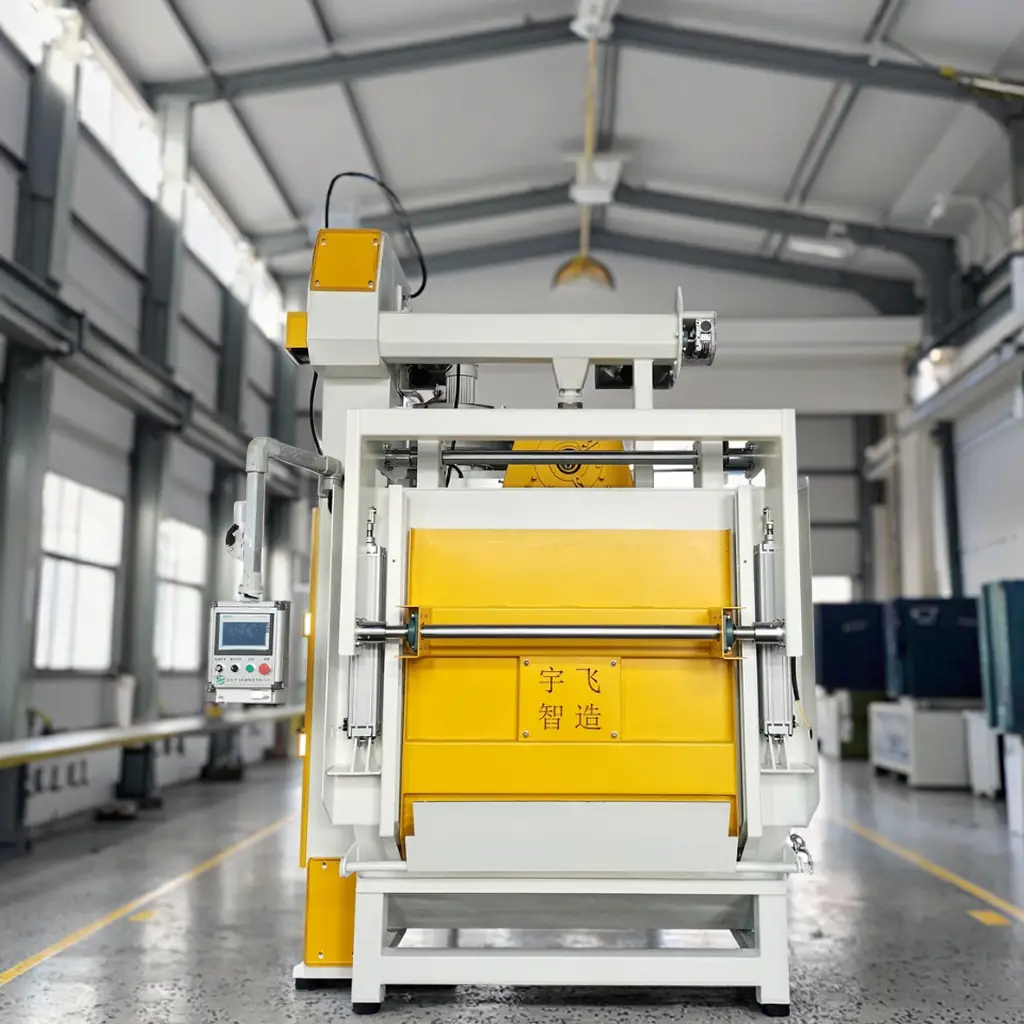
For high-throughput production environments, Yufei offers fully automated loading and unloading systems integrated with the tumble belt machine. Automated skip hoists, vibratory feeders, and post-blast separators create a seamless production cell that minimizes manual handling.
An automated Q3210 line can process 3–4 metric tons per hour of small castings with a single operator, compared to 1–1.5 tons with manual loading. The ROI on automation typically falls within 12–18 months for operations running two or more shifts.
6. Maintenance & Operational Best Practices
- Blast wheel inspection: Check impeller and control cage every 200 operating hours. Replace blades when wear exceeds 30% of original thickness.
- Belt tension: Loose belts cause part slippage and uneven cleaning. Inspect tension weekly.
- Abrasive management: Monitor shot size distribution monthly. Add fresh media when fines exceed 15% to maintain cleaning efficiency.
- Dust collector: Clean or replace filter cartridges every 500 hours. A clogged collector reduces airflow and blast efficiency.
- Chamber liners: Manganese steel liners protect the blast chamber walls. Replace when thickness drops below 50% of original.
7. How to Request a Custom Configuration
Every Yufei tumble belt machine is built to order. To receive an accurate proposal, provide the following information with your inquiry:
- Part material, dimensions, and maximum individual weight
- Required surface preparation standard (e.g., SA 2.5, SSPC-SP10)
- Target throughput in kg or pieces per hour
- Available floor space and layout constraints
- Automation requirements (manual, semi-auto, fully automatic)
Questions buyers ask about tumble belt selection
Related: the Q326 model page, which machine type fits your part, Q326 vs Q3210.
Request a Custom Proposal