
Wire Mesh Belt Shot Blasting Machine
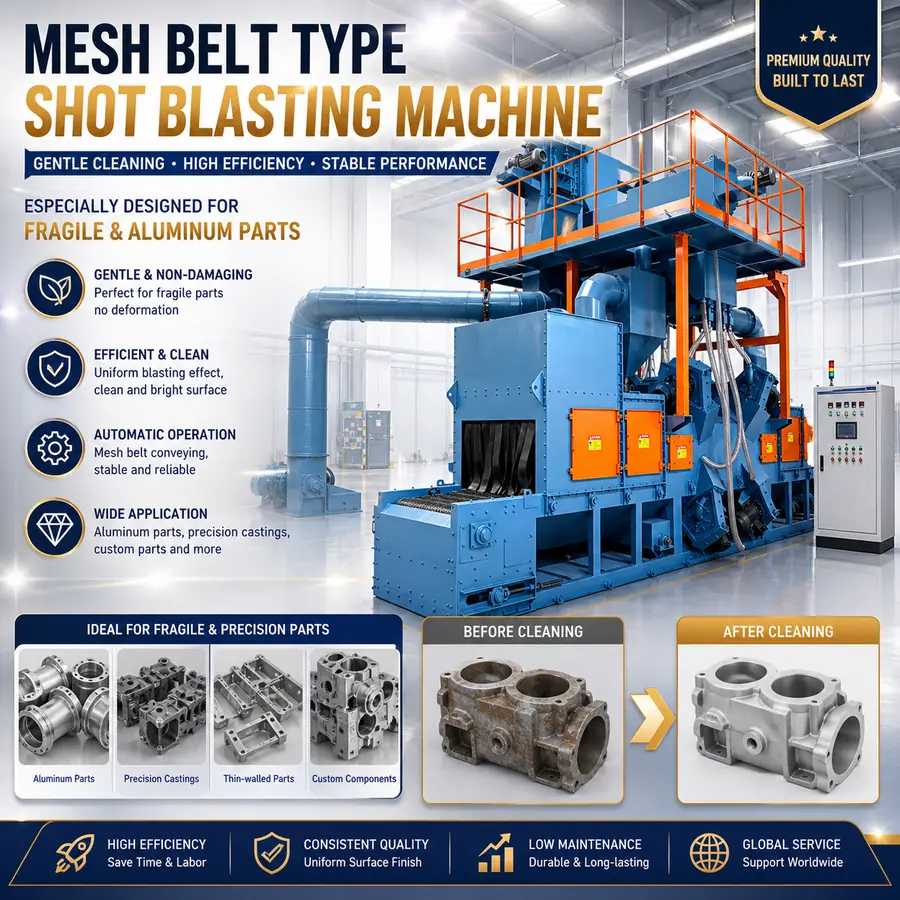
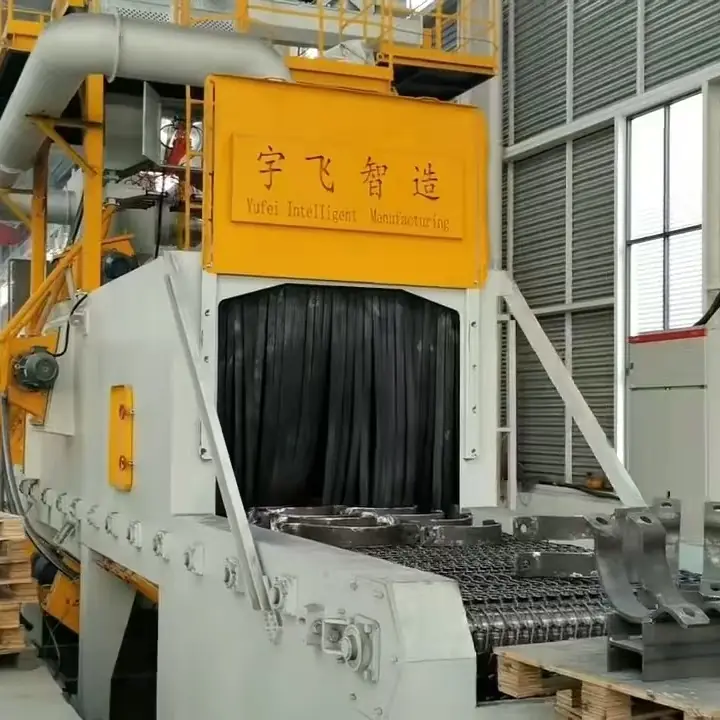
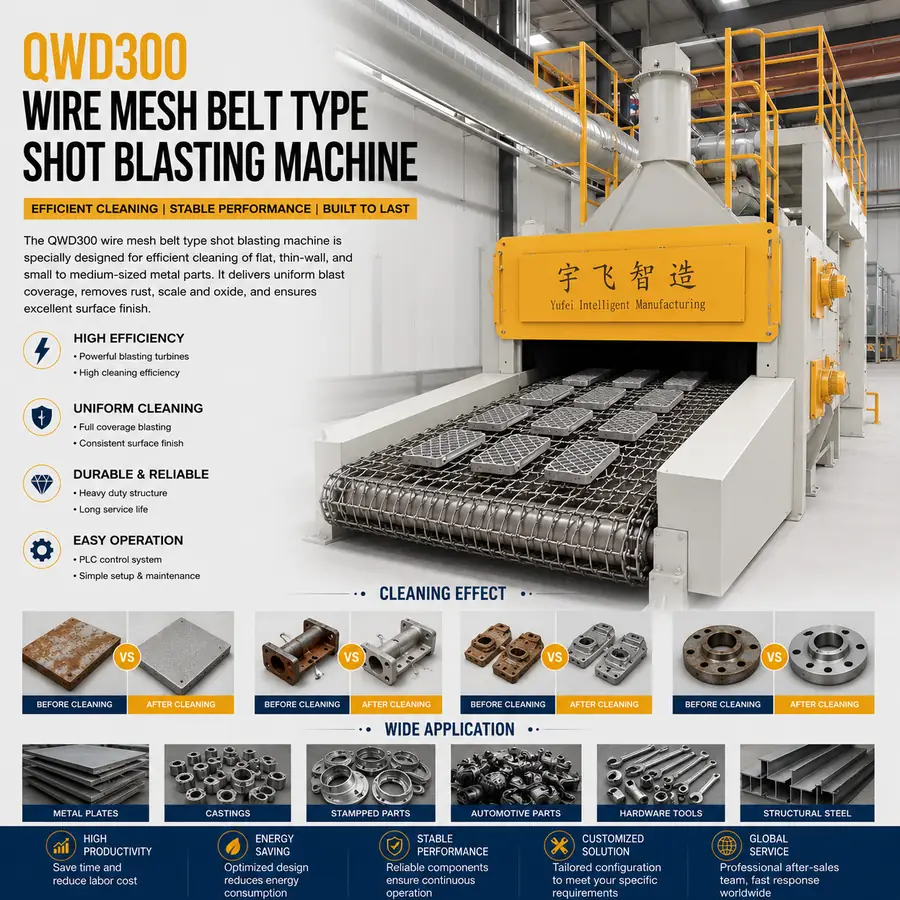
Continuous wire mesh belt shot blasting machines for flat, thin, and heat-sensitive parts. The mesh conveyor provides gentle part handling with high throughput for plates, profiles, springs, and stampings.
| Model Range | QWD60 / QWD80 / QWD100 / QWD120 |
| Belt Width | 600–1,200 mm |
| Cleaning Speed | 0.5–4 m/min |
| Shot Flow Rate | 640–1,200 kg/min |
| Custom Voltage | 380V / 460V / 480V / 220–230V, 50 or 60 Hz |
| Applications | Steel plates, profiles, sheet metal, springs, stampings |
Get a price for this machine
Tell us what you need to blast — material, part size, surface standard. We reply with a quotation and lead time within 24 hours.
Or send a photo on WhatsAppNo catalogue emails. One technical answer from an engineer.
Model Comparison
Which Mesh Belt Width You Need
| Parameter | QWD60 | QWD80 | QWD100 | QWD120 |
|---|---|---|---|---|
| Mesh belt width (mm) | 600 | 800 | 1,000 | 1,200 |
| Cleaning speed (m/min) | 0.5–4 | 0.5–4 | 0.5–4 | 0.5–4 |
| Blast wheels | 4 | 4 | 4 | 6 |
| Shot blasting rate (kg/min) | 4 × 160 | 4 × 160 | 4 × 200 | 6 × 200 |
Belt width is the number that decides the machine: a part has to sit inside it with room to turn, and the width sets the wheel count — four wheels from 600 to 1,000 mm, six from 1,000 to 1,500 mm, eight from 1,500 to 2,500 mm. Opening height is checked at the same time, because it decides where the wheels sit. Chambers up to 3,000 mm wide are built to order.
FAQ
Before You Order
QWD60 or QWD120 — how do I choose?
The mesh belt width is the limit: 600, 800, 1,000 or 1,200 mm. Pick the narrowest belt that the widest part fits across with clearance, then check the shot blasting rate against the finish you need. A wider belt than the work requires costs money in wheels and power for capacity you never use.
What parts belong on a mesh belt rather than a roller conveyor?
Small, flat or thin parts that would fall between rollers or jam against them: stampings, springs, brackets, small castings, sheet cut-outs. A wire mesh belt carries them flat and lets abrasive fall through, which is why it handles light parts at high throughput without tumbling them.
Can I run heat-sensitive or thin parts through it?
Yes, and that is one of the reasons buyers choose a mesh belt. Because parts lie flat and pass through in a single layer, they are not tumbled against each other, so thin sheet and small machined parts keep their shape. Tell us the thinnest section and the finish required, and we set the belt speed and wheel power around it.
Related machines
Buyers weighing this machine usually compare it against these.