
Wire Mesh Belt Shot Blasting: Continuous Through-Feed Solutions for Plates, Profiles & Sheet Metal
Everything you need to know about QWD-series wire mesh belt blasting machines. Throughput optimization, part handling for thin materials, and multi-shift production configurations from Hebei Yufei Machinery.
Why Wire Mesh Belt Blasting?
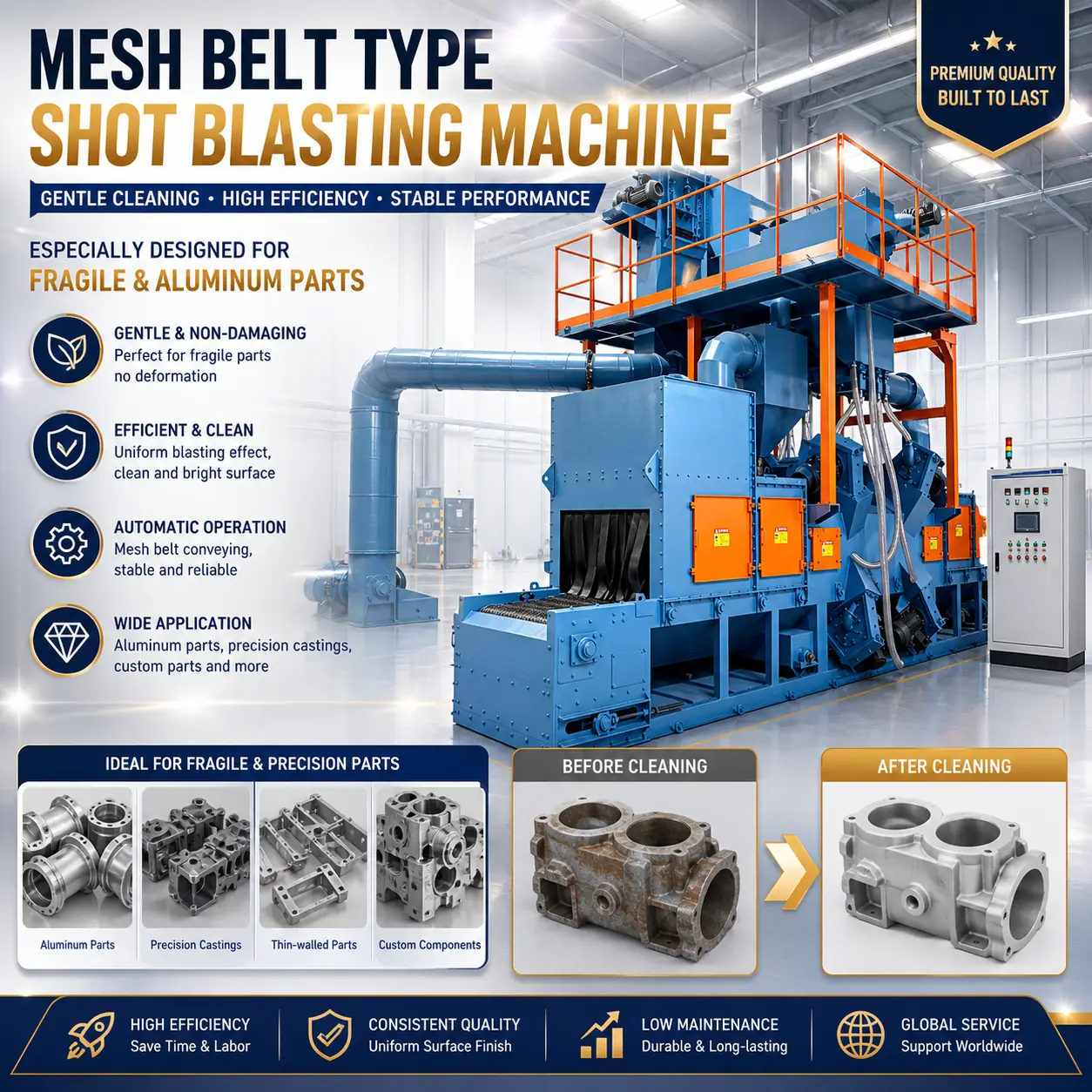
Wire mesh belt shot blasting machines are the go-to solution for continuous, high-volume surface preparation of flat, thin, and heat-sensitive parts. Parts are placed directly onto a moving wire mesh conveyor that carries them through the blast chamber at a controlled speed. Multiple blast wheels — positioned above and below the belt — deliver simultaneous top and bottom surface cleaning in a single pass.
The open-mesh belt design allows spent abrasive, dust, and debris to fall through to the recovery system below, preventing media buildup on parts. This makes wire mesh belt machines ideal for sheet metal, stampings, plates, springs, and profiles where media entrapment would be a problem in enclosed tumble systems.
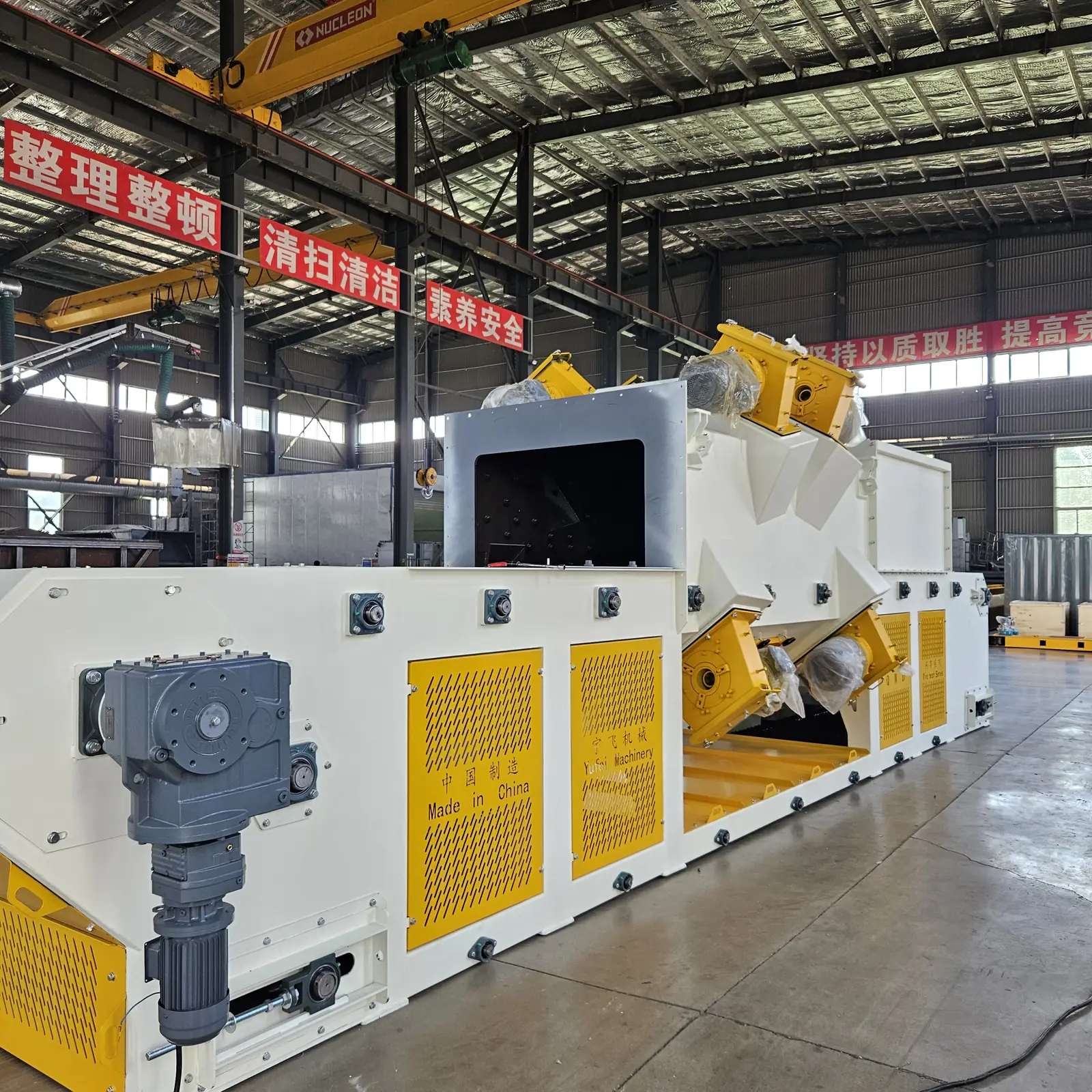
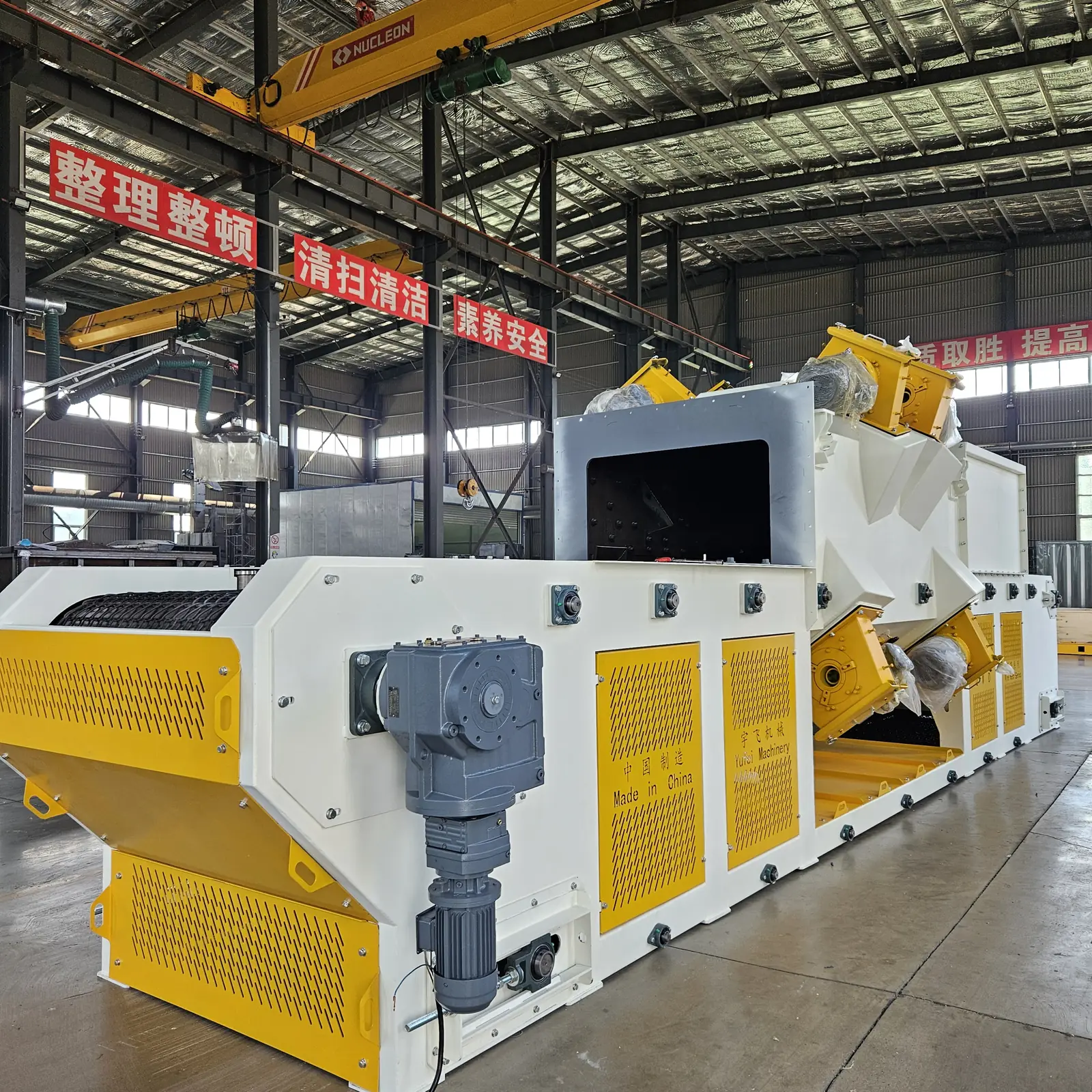
Yufei QWD Series Specifications
Related: mesh belt versus roller conveyor, roller conveyor guide, how wheel count follows chamber width.
| Model | Mesh Belt Width (mm) | Cleaning Speed (m/min) | Blast Wheels | Shot Blasting Rate (kg/min) |
|---|---|---|---|---|
| QWD60 | 600 | 0.5–4 | 4 | 4 × 160 |
| QWD80 | 800 | 0.5–4 | 4 | 4 × 160 |
| QWD100 | 1,000 | 0.5–4 | 4 | 4 × 200 |
| QWD120 | 1,200 | 0.5–4 | 6 | 6 × 200 |
Belt width is the limiting dimension: a part has to lie inside it with clearance on both sides. The wheel count follows that width — four wheels from 600 to 1,000 mm, six from 1,000 to 1,500 mm, eight from 1,500 to 2,500 mm — and the opening height is checked at the same time, because it decides where those wheels sit. Anything up to 3,000 mm wide is drawn per order.
Compare QWD models and request pricing in our wire mesh belt shot blasting machine catalog.
Throughput Calculation & Belt Speed Selection
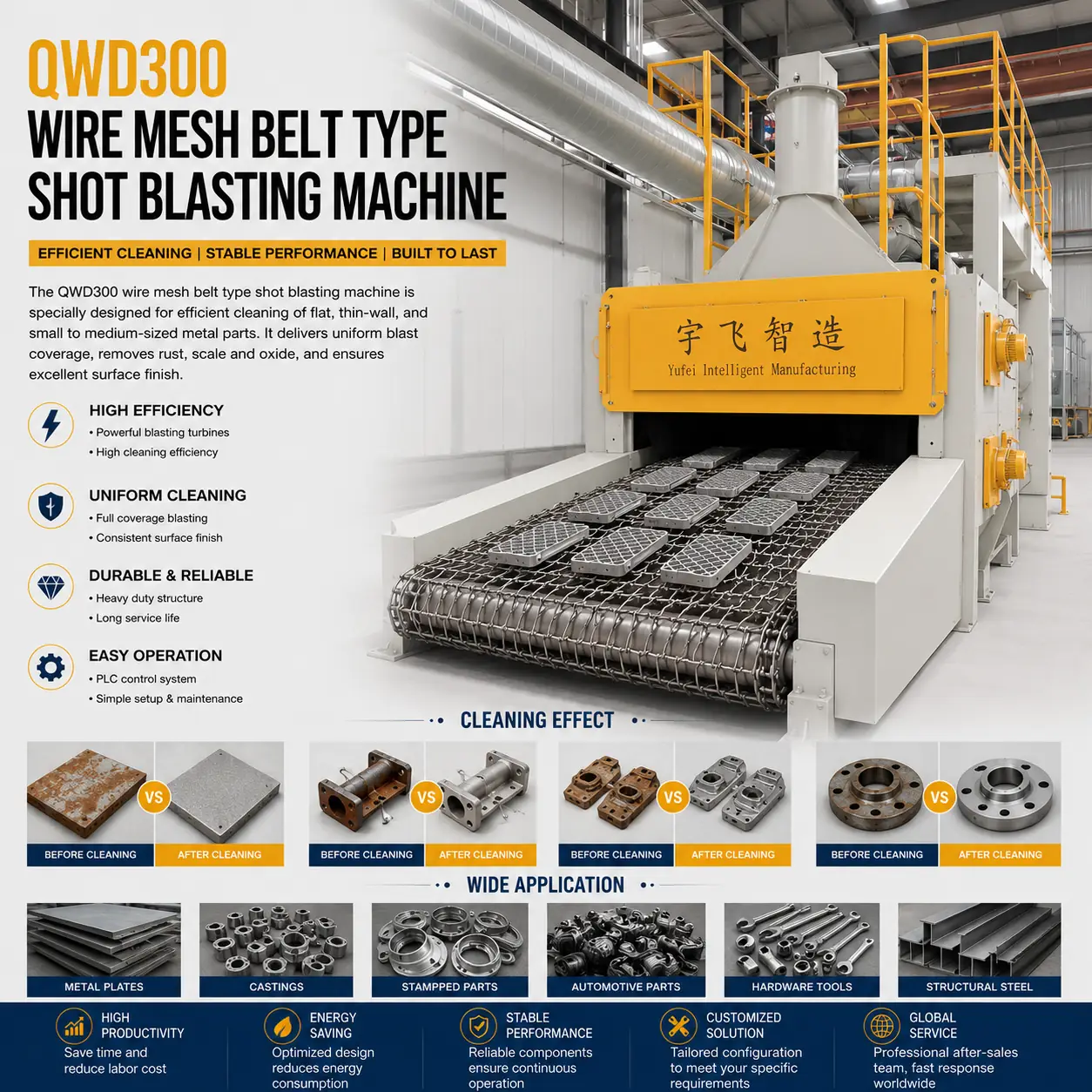
One critical advantage of wire mesh systems is predictable throughput: belt speed and part pitch give you the rate before the machine is built. At 2 m/min with parts spaced every 200 mm, the belt delivers a part into the blast zone every 6 seconds — the machine's rate is set by your loading pattern, not by a cycle time you have to discover. Key variables affecting actual throughput:
- Part overlap: Parts must not overlap on the belt — overlap shields areas from the blast. Maintain minimum 50 mm spacing.
- Blast coverage: Slower belt speeds increase dwell time under the wheels, achieving deeper cleaning on heavily scaled surfaces.
- Belt loading ratio: The effective belt area covered by parts should not exceed 70% to allow abrasive to fall through.
Thin Material Handling
One of the biggest challenges in blast cleaning is processing thin-gauge materials without warping. Abrasive impact generates heat and mechanical stress that can distort sheet metal below 3 mm thickness. Yufei addresses this with:
- Variable-frequency drives on blast wheel motors, allowing abrasive velocity reduction for thin stock.
- Smaller shot sizes (S110–S170) that deliver the same cleaning action with lower impact energy per particle.
- Support rollers beneath the belt at blast wheel locations to prevent belt deflection and part flexing.
Questions buyers ask about mesh belt machines
Common Industries
- Steel Service Centers: Inline descaling of plates and sheets before cutting or forming.
- Automotive Tier Suppliers: Spring leaf, stamping, and bracket cleaning prior to coating.
- Construction Products: Surface preparation of steel profiles, grating, and rebar.