
Four Machines, Four Voltages: How We Configure Shot Blasting Machines for Global Power Grids
In August we shipped four shot blasting machines to North America — and not one of them left the factory on the same electrical spec. 220V for one US plant. 415V for another. 480V for a repeat customer in Salt Lake City. And 600V for a customer in Canada. Here's how that works, and why voltage is the question you should ask first — not after the crate arrives.
August 2026 at a glance
The four machines we shipped this August
North America is not one power grid, and we don't pretend it is. A machine that runs perfectly on a 220V supply in one US facility will sit dark and useless in a 480V plant two states away. So when we build for export, the first question we ask is never "what model?" — it's "what voltage and frequency does your factory actually run?"
This August those answers came back four different ways:
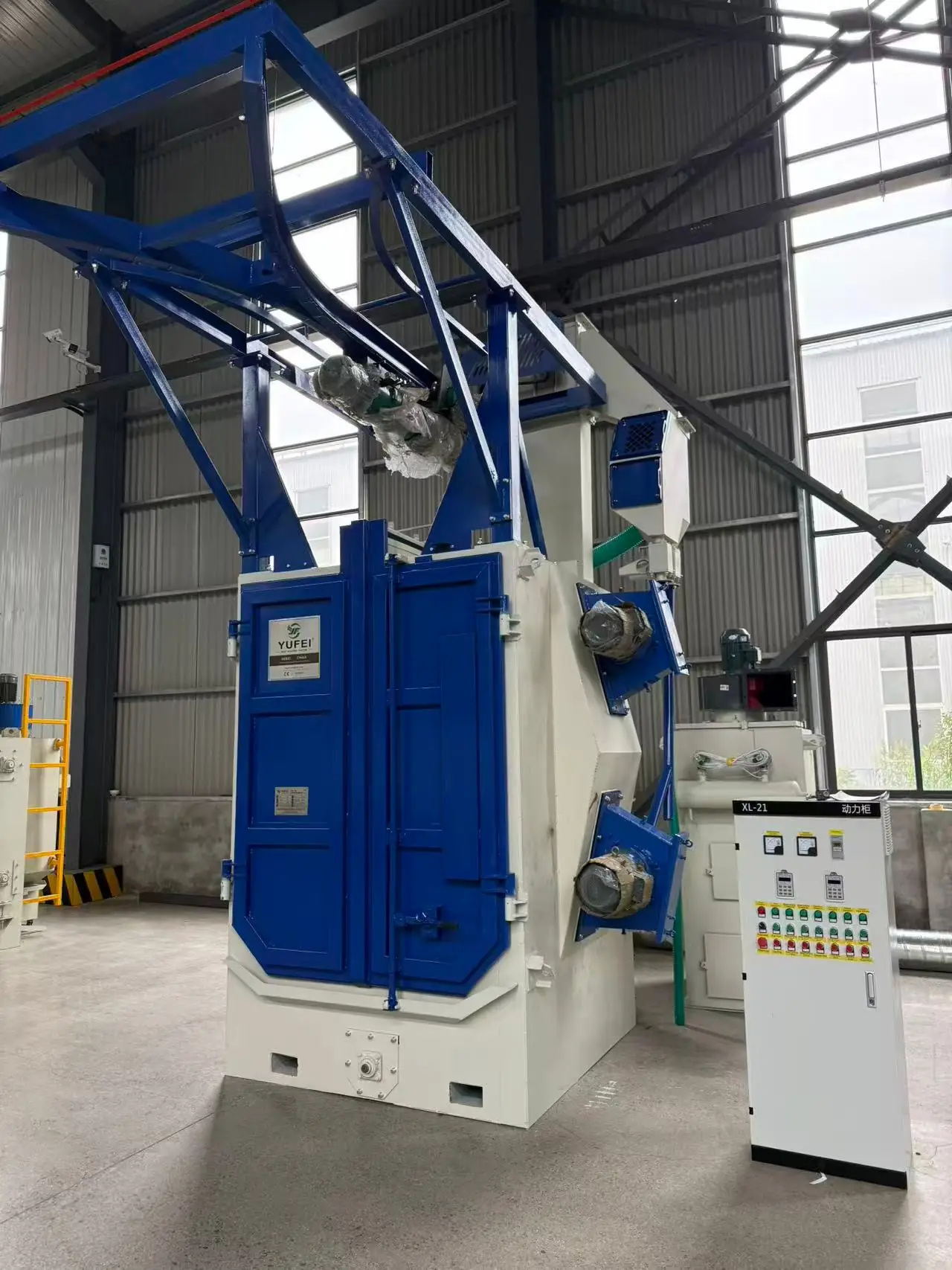
Q376 hook type — 220V, USA. Off-white and blue, ready to connect to the customer's supply.
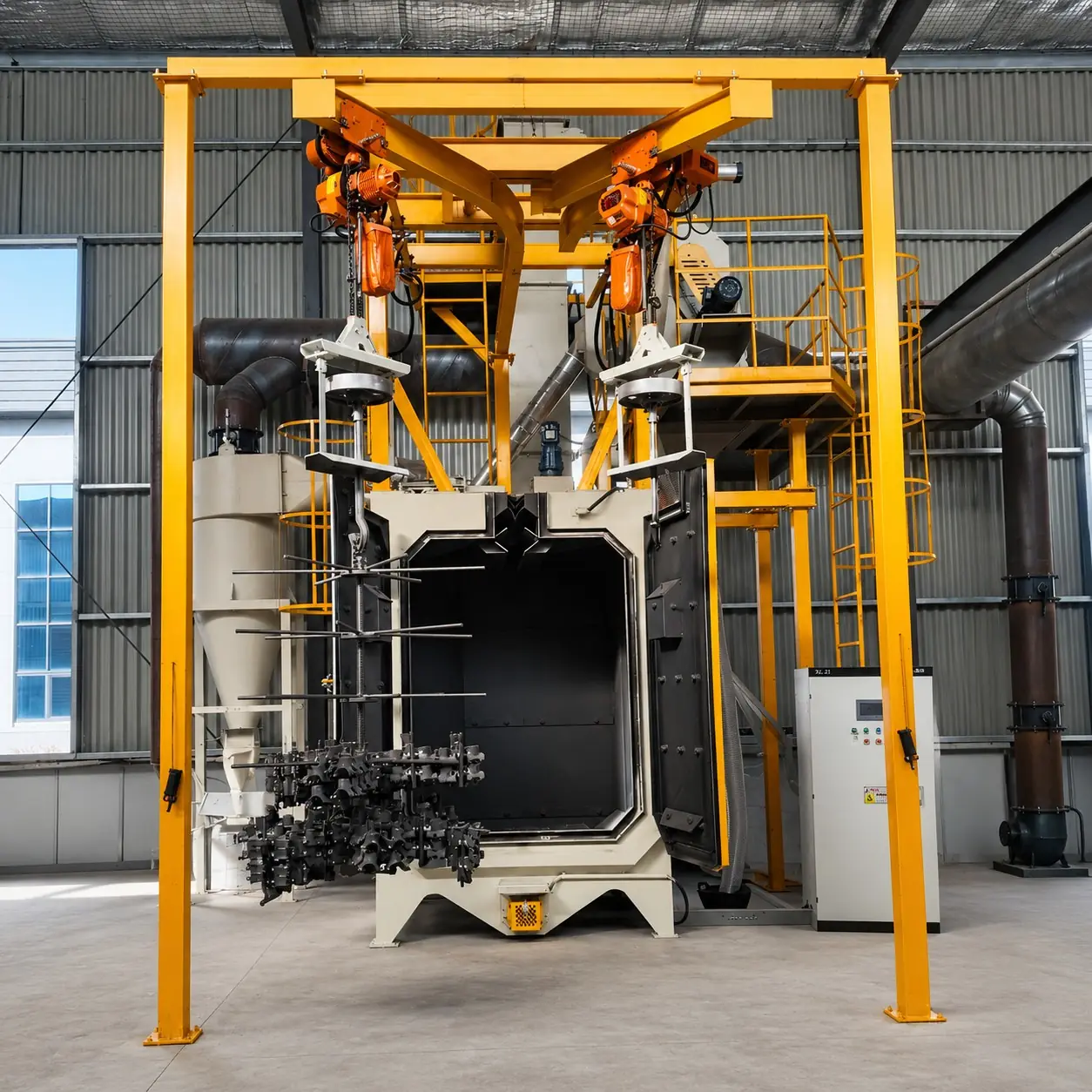
Q378 hook type — 480V, Salt Lake City, Utah. A second machine for the same customer — more on him below.
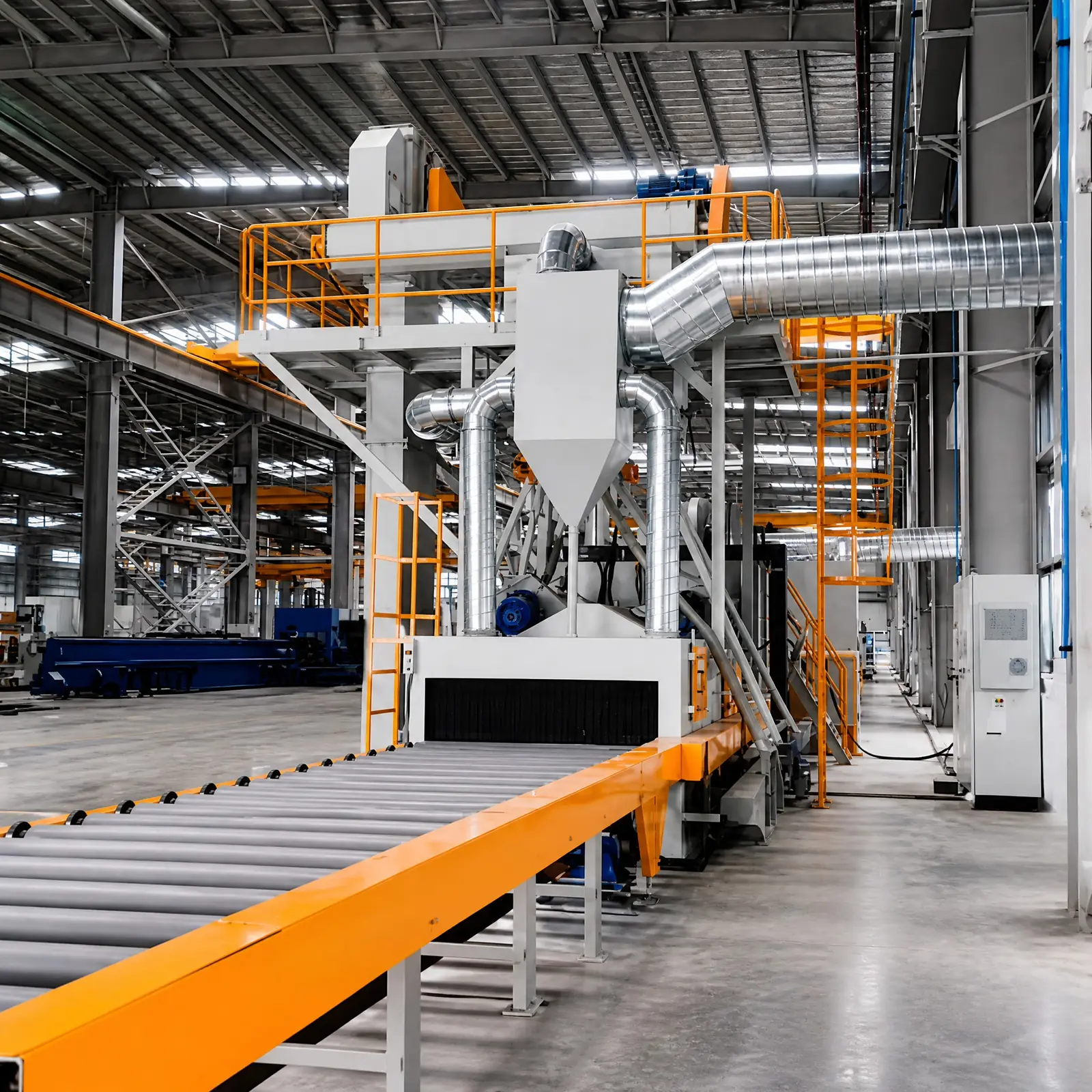
Q6915 roller conveyor — 415V, USA. Conveyor-fed, for continuous throughput of plates and profiles.
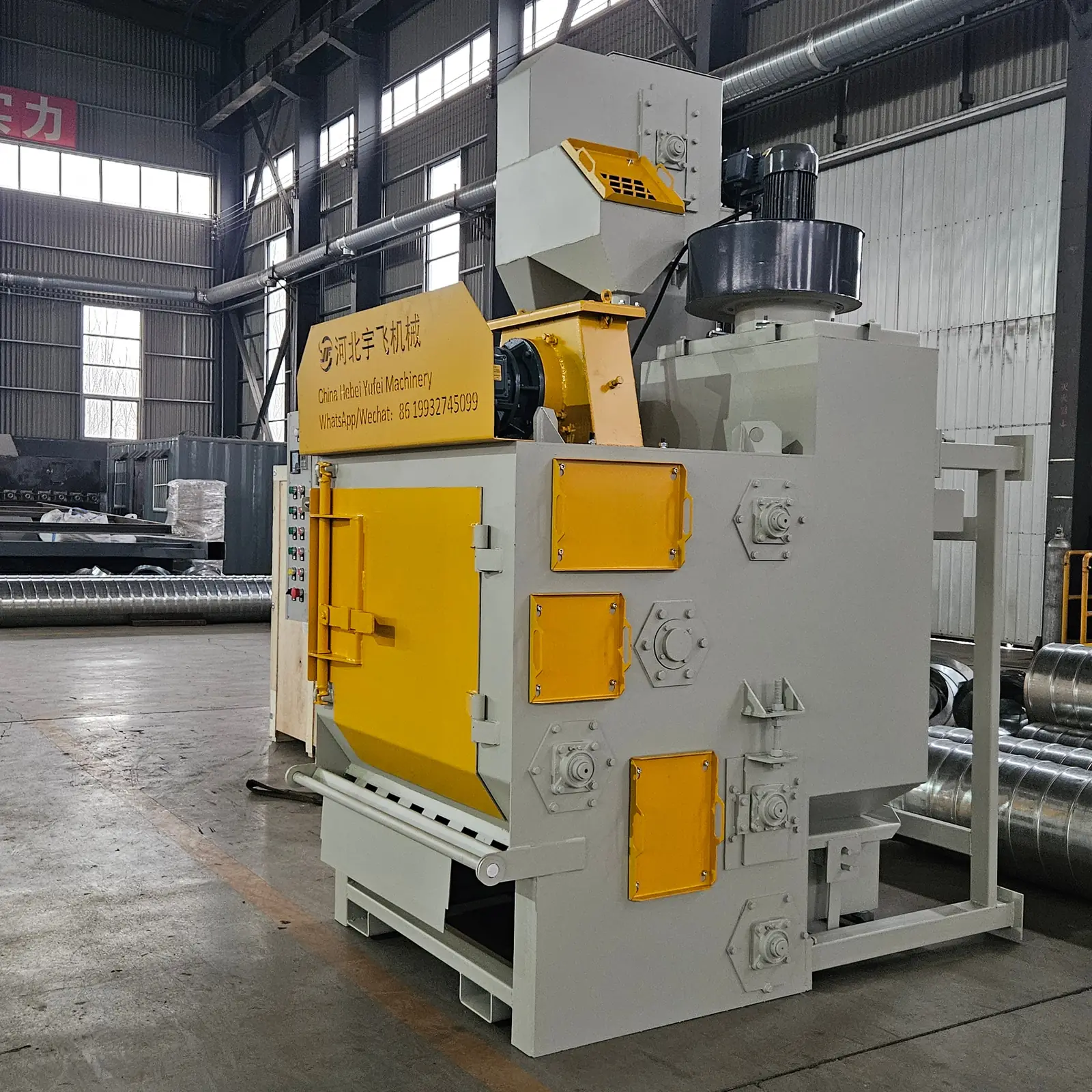
Q326 tumble belt — 600V, Canada. Canadian industrial plants commonly run 600V, so that's what we built and tested.
Why most imported machines sit in crates for two weeks
Here's the scenario we hear about all the time: a buyer in Ohio or Ontario orders a machine, it arrives in a 40-foot container, the riggers position it, and then the electrician opens the cabinet and finds a control system wired for 380V / 50Hz — the Chinese domestic standard. The machine is perfect except for one detail: it can't run on the plant's power. Now the buyer is sourcing a step-down transformer, rewiring motors, and losing production days.
We avoid that by design. Every drive motor and fan is selected for the destination voltage and frequency — not as an afterthought, but as part of the build specification. Your supply voltage goes into the quotation in writing. If you run 480V at 60 Hz, the machine is built, wired and tested for 480V at 60 Hz. Full stop.
"UL-compatible" isn't marketing language — it's a sourcing standard
Every electrical component in a Yufei machine — every device inside the control cabinet, plus the motors, fans and gearboxes — is sourced from China's top-tier suppliers and manufactured to international standards, not domestic-market-only specs. That is what we mean by UL-compatible components: the same class of components North American electrical inspectors expect to see, so your local electrician can sign off without surprises.
The same logic applies to mechanical parts. The motors, gearboxes and crane hoists we fit are from premium Chinese manufacturers whose export lines meet foreign standards. A hoist rated for a 2-ton hook machine in Germany is the same hoist we fit on a machine going to Utah — no "domestic version" shortcuts.
Every machine is tested at its real delivery voltage — in our factory
This is the part that separates us from most exporters. We keep a range of custom transformers at our plant in Hebei, so we can run any machine at the exact voltage it will see on your factory floor — before it goes anywhere near a container.
The Canadian Q326 on 600V? It ran a full test cycle at 600V here, with the customer's control program loaded. The Salt Lake City machines on 480V? Tested at 480V. The control cabinets are pre-assembled and pre-wired in-house, then tested as a complete machine — motors running, shot flowing, dust collector pulling — so what you receive is not a kit to be figured out on site, but a machine that connects to your supply and starts working.
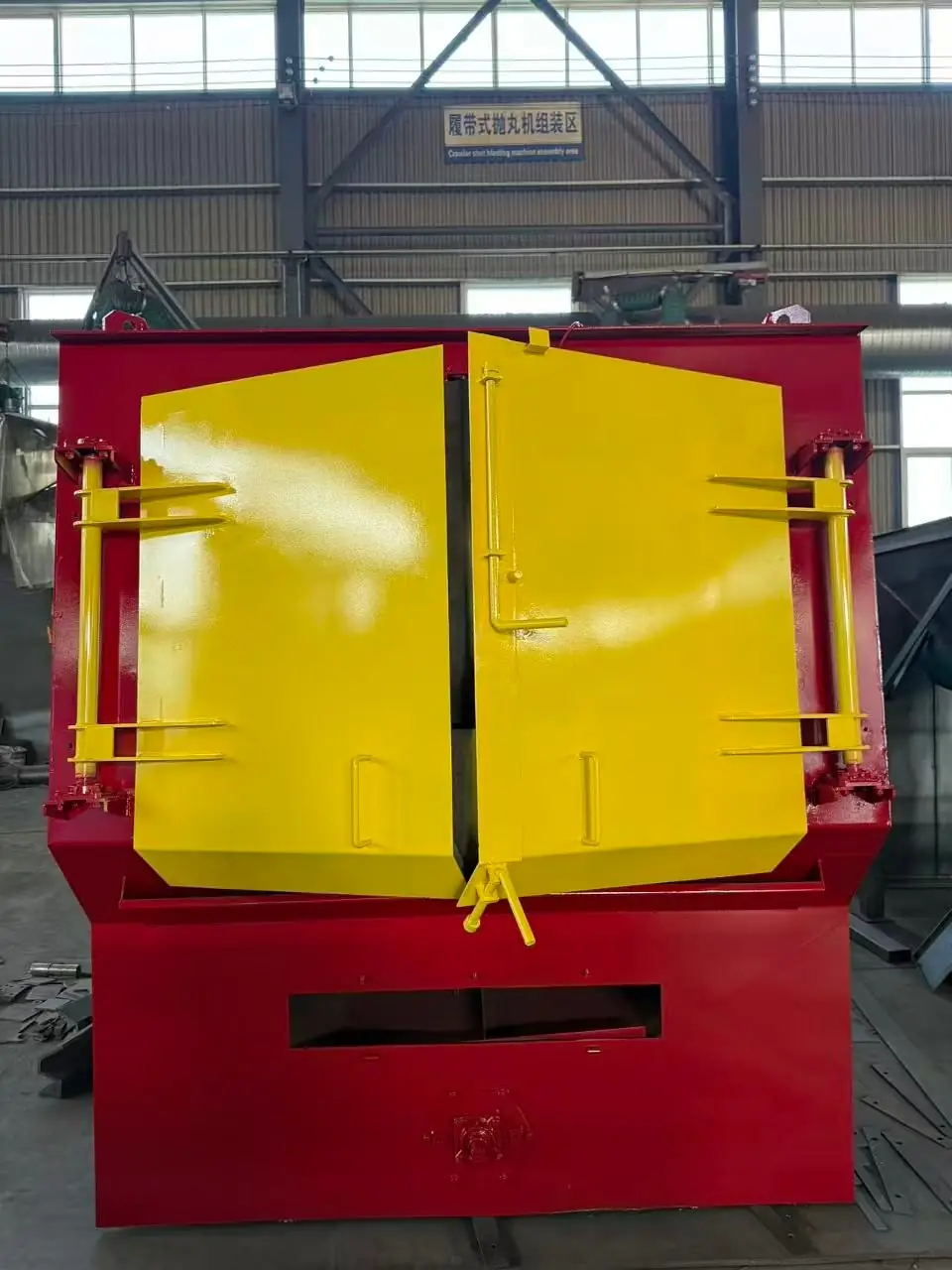
Our tumble belt assembly area — this is the machine type our company was built on.
Mike, Salt Lake City: the second order is the review that counts
Most of our proof is quieter than a testimonial page: it's a customer who orders a second machine. Mike runs a powder coating shop in Salt Lake City, Utah. He found us on Google — no trade show, no referral, just a search — and started with the question we like best: can you actually build for my power?
His plant runs on 480V. His workpieces — fabricated steel parts that need a clean, consistent surface before powder goes on — fit a tumble belt machine. Surface preparation for powder coating is unforgiving: any residual scale or contamination shows up immediately after the coating is cured, and rework costs real money. Mike needed a machine that would meet a demanding finish standard, cycle after cycle.
His first order was a Q3215 tumble belt shot blasting machine, built and tested at 480V, and painted in his chosen blue. Custom colors are a free service for every Yufei customer — no upcharge, no minimum quantity of machines. The photo below is the day it arrived at his facility.
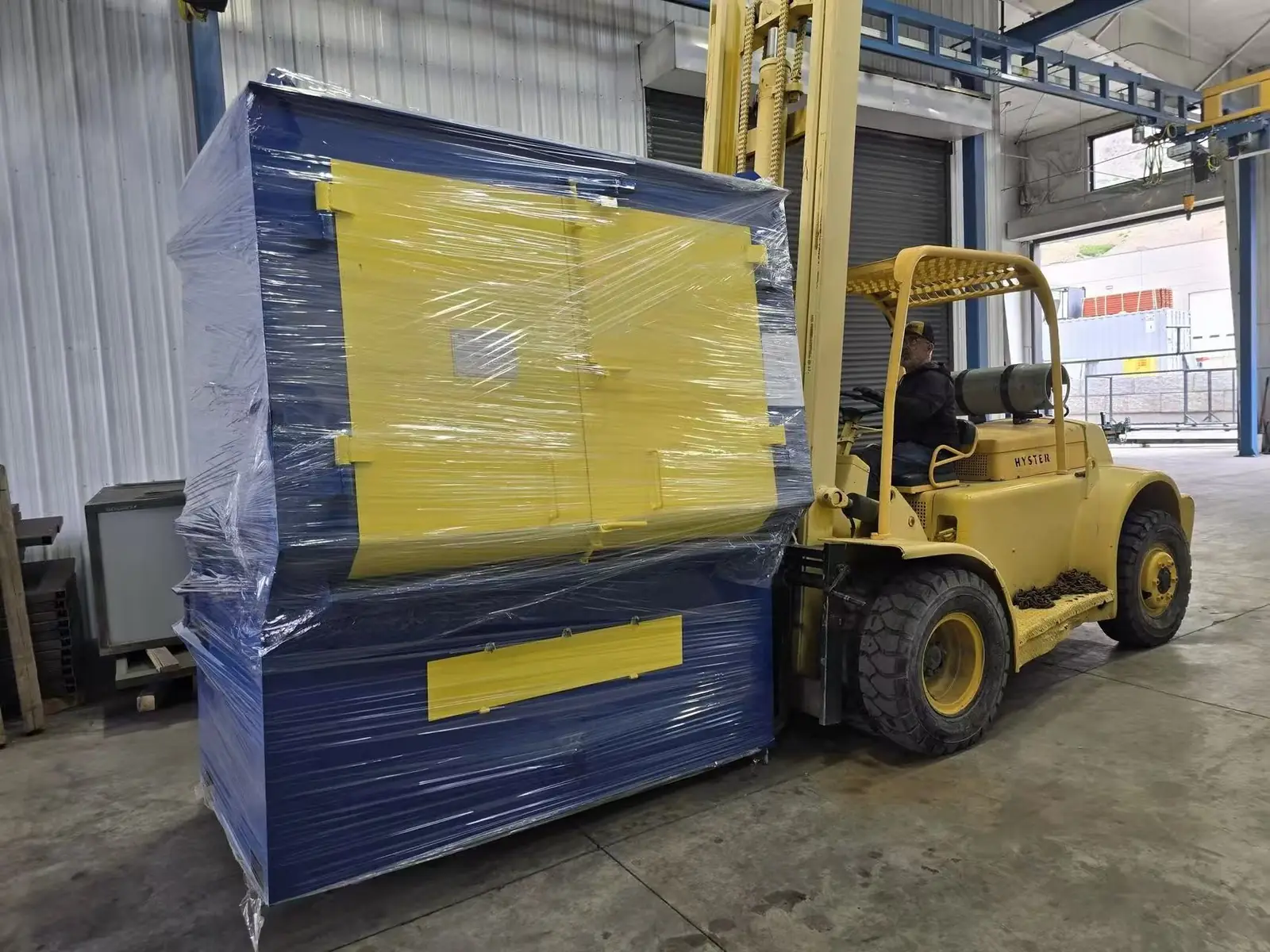
The Q3215, in Mike's blue, arriving at his facility in Salt Lake City.
Then, this August, he ordered again — a Q378 hook type machine in his yellow and orange livery, again built for 480V. When a powder coating shop — a business where surface quality is the entire product — buys a second machine from the same Chinese manufacturer, that is the review that matters. It means the first machine met his standard. It means the voltage was right the first time.
Mike's second Yufei machine: the Q378 hook type, in his custom colors.
Why tumble belt is the machine we stake our name on
If you ask us what we're best at, the answer is tumble belt. It's the machine type Yufei was founded on — the first product line we ever built, and still our entry-level and most popular machine today. The Q3215 is the smallest machine in our range, and it's the one we refuse to compromise on, because it's usually a customer's first introduction to us.
That's also why Mike's experience matters to us so much: a powder coating shop with high surface requirements chose our Q3215 on the strength of our standard, not our price. If you're processing small to medium castings, forgings or fabricated parts in batches, our tumble belt range is where most customers start — and where we have the deepest engineering experience in our factory.
What to put in your inquiry so your machine never sits in a crate
- Your plant supply, in writing: voltage, phase and frequency (e.g. "480V, 3-phase, 60Hz"). If you don't know it, ask your electrician first — it takes one phone call.
- Ask how the machine will be tested before shipping. The answer should be "at your voltage, full load," not "standard test."
- Ask what standard the electrical components meet. UL-compatible and CE-marked components are the export baseline; confirm yours is not a domestic-market build.
- Ask about the cabinet. Is it pre-assembled and pre-wired at the factory, or shipped loose?
- Ask for photos or video of the pre-shipment test — a real factory test at your voltage is easy to show, and easy to fake, so ask to see it.
- If branding matters on your floor, ask about custom colors. At Yufei it's free, and it's how machines end up looking like they were made for your plant.
Project FAQ
Which voltages can Yufei build a machine for?
Machines are configured for the grid standards we ship to most: 220V, 230V, 380V, 415V, 460V, 480V and 600V, at 50 or 60 Hz. Tell us your plant supply before production and the machine is built, wired and tested for exactly that voltage.
Are the electrical components UL-certified?
We build with UL-compatible components: every device in the control cabinet, plus the motors, fans and gearboxes, is sourced from China's top-tier suppliers and manufactured to international standards. If your project requires a specific certification or your inspector needs particular documentation, tell us before production and we'll confirm what we can provide.
Will I need a step-down transformer?
Not if we know your supply voltage when the order is placed. The machine is wound, wired and tested for your grid before it ships. External transformers belong on sites where the supply changes after the machine is built.
Can you paint the machine in our company colors?
Yes — custom color is a free service for every Yufei customer. Mike's Q3215 left the factory in his blue, and his Q378 in his yellow and orange. If the machine will sit on your production floor for the next ten years, it may as well look like it belongs there.
Tell us your voltage — we'll build and test for it
Send us your plant supply (voltage, phase, frequency) and the parts you need to clean. We'll confirm the model, the configuration, and the pre-shipment test you can expect — usually within 24 hours.
Related: which machine type fits your part, the Q326 model page.
Send Your Specifications